House greyjoy explained is one of the most fascinating and culturally distinct noble family studies in the entire Game of Thrones universe.
They are not like the other great houses. They do not value wealth accumulated through trade or agriculture. They do not build their identity around ancient bloodlines or political maneuvering.
What house greyjoy explained represents is something older and stranger — a culture built entirely around the sea, violence, and a theology of death and rebirth that shapes every aspect of how the Ironborn understand themselves and their place in the world.
Understanding them fully reveals one of Game of Thrones’ most carefully constructed alternative civilizations — and one of its most consistently underestimated political forces.
Who Are the Greyjoys?
House Greyjoy is the ruling family of the Iron Islands — a harsh archipelago of rocky islands off the western coast of Westeros, battered by the storms of the Sunset Sea and largely incapable of supporting significant agriculture.
Their seat is Pyke — a castle built across several sea stacks connected by rope bridges, its towers rising from the spray of the waves crashing below.
Their sigil is a golden kraken on a black field — a creature of the deep sea that perfectly captures the Ironborn identity as raiders and reavers who take what they want from the ocean and from the weaker peoples of the mainland.
House greyjoy explained at its most fundamental is this: a family shaped entirely by scarcity — not enough fertile land, not enough resources, not enough of anything except sea and stone and the will to take what they need from others.
The Iron Price and the Gold Price
The house greyjoy explained culture is defined by a distinction that appears simple but reveals an entire worldview — the difference between the iron price and the gold price.
The gold price means buying something — paying for it with wealth accumulated through trade, agriculture, or other productive work.
The iron price means taking something — paying for it with the violence required to seize it from whoever currently possesses it.
The Ironborn consider the gold price beneath them. Only the iron price is honorable in their culture — only what is taken by force represents genuine achievement and genuine ownership.
This is not simply a philosophy of theft. It is a complete alternative value system that treats the capacity for violence as the fundamental measure of worth — and that has sustained Ironborn culture through centuries of geographic hardship by directing that violence outward toward the mainland.
The Drowned God
No discussion of house greyjoy explained is complete without understanding the Drowned God — the religion that defines Ironborn identity at every level.
The Drowned God is a deity of the sea whose mythology holds that he fought and defeated the Storm God in the depths of the ocean — that he died and was reborn through the waters, and that those who serve him participate in that cycle of death and resurrection.
Ironborn priests — called Drowned Men — perform literal drowning rituals on followers, holding them underwater until they lose consciousness and then reviving them.
The house greyjoy explained relationship with the Drowned God is not simply religious observance. It is the theological foundation of their entire martial culture — the belief that real men have faced death in the water and returned from it, that courage is proven through proximity to drowning, and that a death at sea is the most honorable end available to an Ironborn warrior.
For the full context of how the Drowned God fits within the broader religious landscape of Westeros, our Westerosi Religion Explained article covers all the major faiths and how they shape the political and cultural landscape of the Seven Kingdoms.
Balon Greyjoy and the First Rebellion
The house greyjoy explained story in the period closest to Game of Thrones begins with Balon Greyjoy — the lord who launched the Greyjoy Rebellion approximately nine years before the events of the show.
Balon declared independence from the Iron Throne and launched a naval assault on the Westerosi mainland — burning the Lannister fleet at Lannisport and temporarily seizing several significant positions.
Robert Baratheon crushed the rebellion within a year — sailing to the Iron Islands with a superior fleet and ground force that overwhelmed Ironborn resistance at every point.
Balon’s punishment was not death but humiliation. His remaining sons were left to him — but his eldest surviving son Theon was taken as a ward by Ned Stark, a hostage against future rebellion.
The house greyjoy explained aftermath of that rebellion shaped everything that followed — a lord humiliated but not destroyed, nursing his defiance in a castle by the sea, waiting for an opportunity that he believed was always coming.
For context on the Stark family who held Theon as a ward and what that relationship meant for both families, our House Stark Explained article covers the Northern family’s complete history.
Credit: Image via Winter is Coming — House Greyjoy Game of Thrones coverage © HBO
Theon Greyjoy: The Ward Who Lost Everything
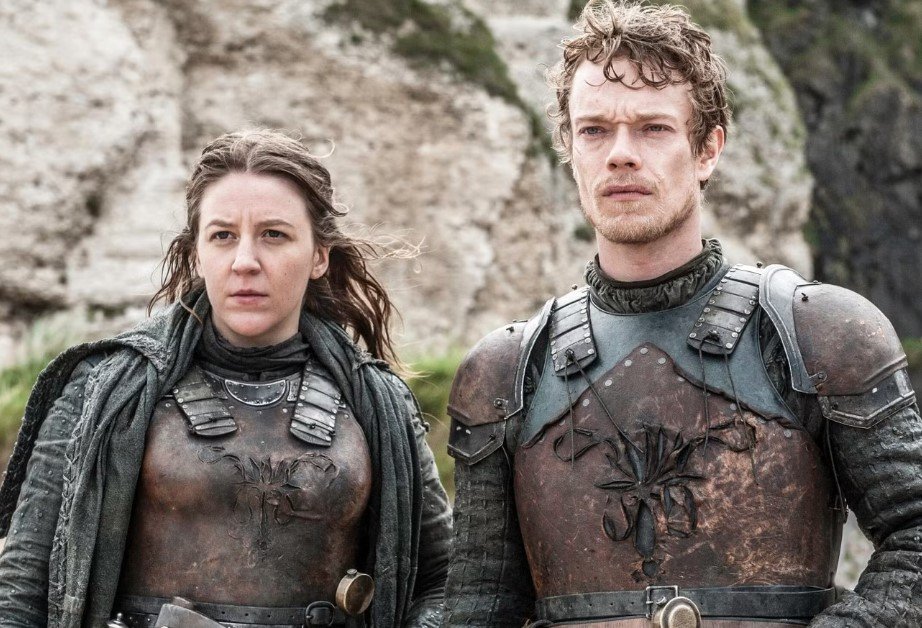
The house greyjoy explained character study reaches its most dramatically complex point through Theon Greyjoy — Balon’s youngest son and the show’s most fully realized examination of what Ironborn identity costs when it collides with the outside world.
Theon grew up at Winterfell — raised as Ned Stark’s ward from the age of roughly ten, educated alongside Robb Stark and genuinely integrated into Northern culture while never fully belonging to it.
He was neither fully Ironborn nor fully Northern. He was a hostage who had learned to love his captors and a Greyjoy who had never truly lived the iron price.
The house greyjoy explained tragedy of Theon’s arc across Game of Thrones is one of the most precisely constructed in the entire series — a man who betrayed the family that raised him to prove loyalty to the family that owned him, and who paid a price for that betrayal so extreme it effectively erased his identity entirely.
His subsequent arc — through capture, torture, psychological destruction, and eventual redemption — is the show’s most extended examination of what identity means when everything it was built on has been stripped away.
Yara Greyjoy: The Heir Who Should Have Ruled
One of the most important dimensions of house greyjoy explained is Yara — Balon’s daughter and the heir he should have named but initially refused to.
Yara is everything the Ironborn claim to value — fierce, capable, ruthless when necessary, and a genuinely skilled naval commander whose tactical intelligence exceeds her father’s.
The house greyjoy explained irony of Balon’s preference for male succession in a culture that claims to value only demonstrated strength is one of Game of Thrones’ sharpest political observations — a society that theoretically values the iron price above all else, still defaulting to inheritance patterns that prioritize gender over capability.
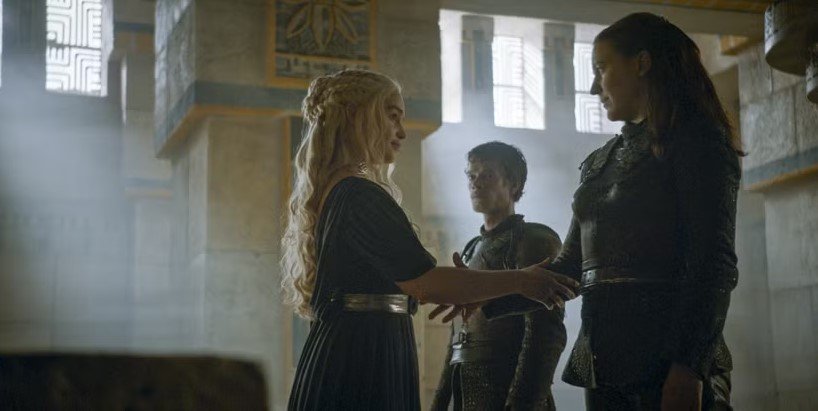
Yara’s bid for the Salt Throne after Balon’s death — contested by her uncle Euron — is one of the most dramatically charged political sequences the show produced in its later seasons.
Euron Greyjoy: Chaos as a Philosophy
No house greyjoy explained is complete without examining Euron — Balon’s brother and one of the show’s most deliberately constructed agents of chaos.
Euron Greyjoy is what happens when the Ironborn value system is stripped of its communal constraints and taken to its logical individual extreme.
He does not raid for resources or raid for his house’s survival. He raids because destruction is itself the point — a man who has decided that the willingness to do absolutely anything is itself a form of power.
The house greyjoy explained through Euron is therefore the dark mirror of what Ironborn culture contains — the element that the communal rituals of the Drowned God and the iron price are supposed to channel and constrain, fully unleashed in a single individual who has abandoned every constraint simultaneously.
His alliance with Cersei Lannister in the show’s later seasons is one of the more polarizing creative choices — a character whose theatrical nihilism worked brilliantly in smaller doses and became harder to sustain as his role expanded.
The Greyjoy Legacy
The house greyjoy explained legacy across Game of Thrones is ultimately the story of a culture that was genuinely extraordinary and genuinely limited in equal measure.
The Ironborn built something rare — a civilization that maintained its independence from the Targaryens through resistance, that preserved a distinct cultural identity across centuries of pressure from the mainland, and that produced warriors of genuine quality.
But the iron price as a complete philosophy of life is ultimately a dead end — a culture that takes rather than builds, that values destruction over creation, and that has no answer to the question of what comes after the raiding stops.
Theon’s arc is the show’s answer to that question — a man who took the iron price to its conclusion and found nothing on the other side except emptiness, and who had to build himself back from nothing using values he had learned from people his culture had taught him to despise.
For the full picture of how the Ironborn’s relationship with the Iron Throne shaped Westerosi history across centuries, our Iron Throne Succession Explained article covers the political framework that the Greyjoys repeatedly challenged.
Final Thought
House Greyjoy explained is ultimately the story of what happens when a culture optimizes entirely for survival in scarcity — and then finds that the values scarcity produced are inadequate for anything beyond it.
The Ironborn are extraordinary in the context the iron price was designed for. They are terrifying raiders, capable sailors, and genuinely fearless warriors.
But house greyjoy explained across eight seasons of Game of Thrones reveals a family and a culture that could never fully resolve the tension between what they were and what the world required them to become.
Theon resolved it — at enormous cost, through experiences that should have destroyed him. Yara came closest to finding a sustainable path forward.
Euron demonstrated what happened when no resolution was sought at all.
The iron price is real. But so is its cost.