
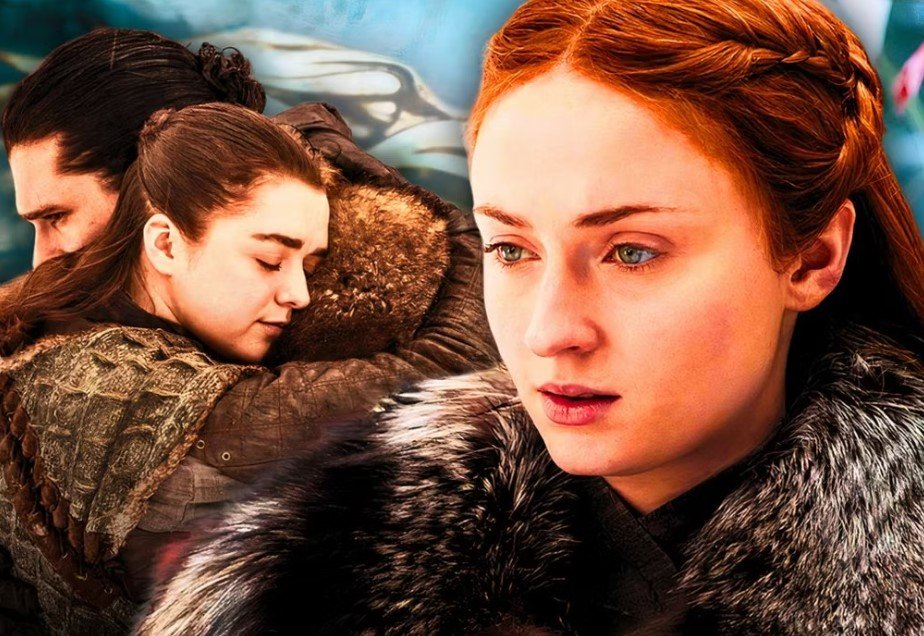
House Stark explained is essential reading for anyone who wants to understand what Game of Thrones is really about beneath the politics and the dragons.
The Starks are the moral center of the original series — the family whose values of honor, duty, and loyalty the show uses as its primary lens for examining how power actually works in Westeros.
House stark explained is not simply the story of a noble family caught in a political conflict. It is the story of what happens when people who believe in doing the right thing are forced to navigate a world where doing the right thing is treated as a fatal weakness.
Understanding the Starks means understanding everything Game of Thrones is trying to say.
Who Are the Starks?
House Stark is the ruling family of the North — the vast, cold territory above the Neck that separates the northern reaches of Westeros from the more temperate south.
They have held the North for eight thousand years, ruling from their ancestral seat of Winterfell — one of the oldest inhabited castles in Westeros.
Their words are Winter is Coming — not a threat but a warning, reflecting the Northern mindset that comfort and peace are temporary conditions that must always be prepared for.
House stark explained at its most fundamental is a family shaped by their environment — harder, more direct, and more practically minded than the southern houses who spend their energy on court politics and dynastic maneuvering.
The Stark Values: Honor Above Everything
The defining characteristic of house stark explained is the family’s relationship with honor.
For the Starks — and particularly for Ned Stark, the patriarch whose execution in season one defines the show’s entire moral framework — honor is not a political tool but a genuine commitment.
Ned believes that the right thing to do and the politically advantageous thing to do are the same thing. He is wrong about this, repeatedly and fatally.
But house stark explained as a concept is not a critique of honor. It is an examination of what honor costs in a world that has largely abandoned it — and whether that cost makes it worthless or more valuable than ever.
Ned Stark: The Man Who Defined the House
No discussion of house stark explained is complete without examining Eddard Stark — called Ned — whose arc in season one remains one of the most deliberately shocking character choices in television history.
Ned was the Lord of Winterfell, Warden of the North, and best friend of King Robert Baratheon. He was appointed Hand of the King and traveled to King’s Landing to serve the crown.
He discovered that Joffrey Baratheon — the heir to the throne — was not Robert’s son but the product of Cersei’s relationship with her twin brother Jaime.
He chose to confront Cersei directly rather than act immediately — giving her a chance to flee with her children rather than expose them to Robert’s wrath.
That decision, rooted entirely in honor, cost him his head.
House stark explained begins and ends with that execution — the moment the show announced that honorable men do not survive in King’s Landing, and that the game of thrones has no place for people who play by different rules.
The Stark Children: Five Different Answers to the Same Question
One of the most brilliant structural choices in house stark explained is how the five Stark children — Robb, Sansa, Arya, Bran, and Rickon — each represent a different response to the world their father’s death forced them into.
Robb tried to fight it directly, raising an army and winning every battle before losing the war to politics and broken promises. His story ends at the Red Wedding — for a full breakdown of the family responsible for that betrayal, our House Frey Westeros Explained article covers the Red Wedding in complete detail.
Sansa learned to survive within the system — absorbing its cruelties, adapting her behavior, and eventually emerging as one of the shrewdest political operators in the show’s later seasons.
Arya rejected the system entirely — training as an assassin, abandoning her identity, and returning to eliminate the enemies who destroyed her family with methods that would have horrified her father.
Bran transcended it altogether — becoming the Three-Eyed Raven, shedding most of his human identity, and ending the series as King of the Six Kingdoms through a path nobody could have predicted. Our Bran Stark Explained article covers his complete transformation in depth.
Rickon — the youngest — had no arc at all. He was killed as a piece of psychological warfare by Ramsay Bolton, a death that served only to motivate Jon Snow’s army. His fate is perhaps the most honest statement the show makes about what the game of thrones does to people who are simply in the wrong place.
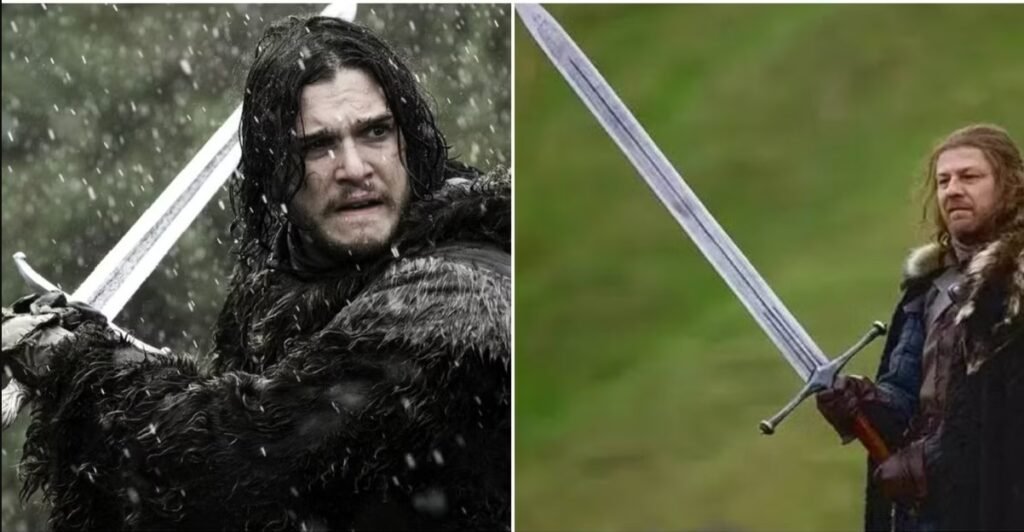
Winterfell: More Than a Castle
House stark explained cannot ignore Winterfell — the ancestral seat that functions as almost a character in its own right throughout the series.
Winterfell is ancient, warm despite the cold around it, and built above natural hot springs that heat the castle through the walls.
It has stood for eight thousand years. It has been held by the Starks for all of them — a continuity of family and place that the show uses as a counterweight to the chaos and instability of King’s Landing.
When Theon Greyjoy sacks Winterfell in season two, it is not simply a military setback. It is a violation of something the show has been treating as sacred.
When the Starks retake it, it feels like a restoration of order in a way that no political victory in King’s Landing ever quite achieves.
House stark explained is inseparable from Winterfell — the castle is the physical embodiment of everything the family stands for.
The Direwolves
One of the most distinctive elements of house stark explained is the direwolf — the sigil animal of the house that becomes literal when the Stark children each bond with a pup found beside their dead mother in the first episode.
Each direwolf mirrors its owner’s arc in ways the show handles with considerable subtlety.
Ghost — Jon’s white direwolf — survives the entire series, mirroring Jon’s own resilience and outsider status. Nymeria — Arya’s wolf — is sent away and survives in the wild, leading her own pack, mirroring Arya’s independence. Grey Wind dies at the Red Wedding with Robb. Lady is killed early, reflecting Sansa’s early loss of innocence.
The direwolves are not simply fantasy window-dressing. They are house stark explained in animal form — the family’s values and fates given physical embodiment.
The Stark Legacy
By the end of Game of Thrones, house stark explained has come full circle in the most unexpected way.
Sansa is Queen in the North — an independent kingdom once again, achieved not through war but through political negotiation at the Great Council.
Arya has sailed west of Westeros to explore unmapped territory, carrying the Stark spirit of directness and independence into an entirely new context.
Bran sits on the Iron Throne — or what replaced it — as King of the Six Kingdoms, having achieved the ultimate political position through means none of his family could have imagined.
Jon Snow — who is technically Aegon Targaryen but is a Stark in every way that matters — has gone beyond the Wall with the Free Folk, finally finding a place where his particular combination of honor and outsider identity is valued rather than punished.
The house stark explained legacy is therefore not extinction but transformation. The family that began the series as the moral heart of Westeros ended it having changed every institution they touched — at enormous personal cost, but without abandoning the values that defined them.
Final Thought
House Stark explained ultimately comes down to a single question that Game of Thrones asks across eight seasons without ever giving a simple answer.
Can honorable people survive in a world without honor?
The Stark answer is complicated. Ned could not. Robb could not. But Sansa did. Arya did. Bran did. Jon did — in his own way, on his own terms.
House stark explained is not a tragedy about the death of honor. It is a more interesting and more honest story than that — about how honor adapts, about what it costs, and about whether the version of it that survives a world like Westeros is still recognizable as the thing Ned Stark died for.
The answer the show gives is yes. Barely. And at a price none of them would have chosen to pay.
But yes.
Thanks for one’s marvelous posting! I quite enjoyed reading it, you could be a great author.
I will be sure to bookmark your blog and will often come back
in the future. I want to encourage one to continue your great job, have a nice evening!