Dragonseeds explained is one of the most anticipated storylines heading into House of the Dragon season three — and one of the least understood by casual viewers.
The concept sounds simple on the surface. The Black faction has dragons without riders. They need new riders. They search for people who might be able to bond with those dragons.
But dragonseeds explained in full is far more complicated, more dangerous, and more morally charged than that summary suggests.
It is the story of what happens when a war machine runs out of the most precious resource it has — and has to look for replacements among people who were never supposed to be part of the story at all.
What Is a Dragonseed?
The term dragonseed refers to people who carry Targaryen or Valyrian blood outside the main royal family — descendants of Targaryen bastards, Velaryon branches, or other blood connections to the dragonlord tradition.
Dragon bonding is not purely a matter of royal legitimacy. It is a matter of blood — specifically the Valyrian blood that carries some hereditary connection to the ancient dragonlord tradition of Old Valyria.
A dragonseed does not need to be a recognized Targaryen. They do not need to be noble. They do not even need to know about their bloodline.
What they need is enough of the right ancestry — and the willingness to walk up to a wild, grieving, riderless dragon and try to claim it without being killed.
Why the Black Faction Needed Them
Dragonseeds explained begins with a crisis that developed gradually across the first two seasons of House of the Dragon.
The Black faction entered the Dance of the Dragons with a significant dragon advantage — more riders, more beasts, more aerial firepower than the Greens could field.
But dragonriders kept dying. Laena Velaryon died before the war began. Rhaenys died at Rook’s Rest. Lucerys died over Shipbreaker Bay. Each death left a dragon without a rider.
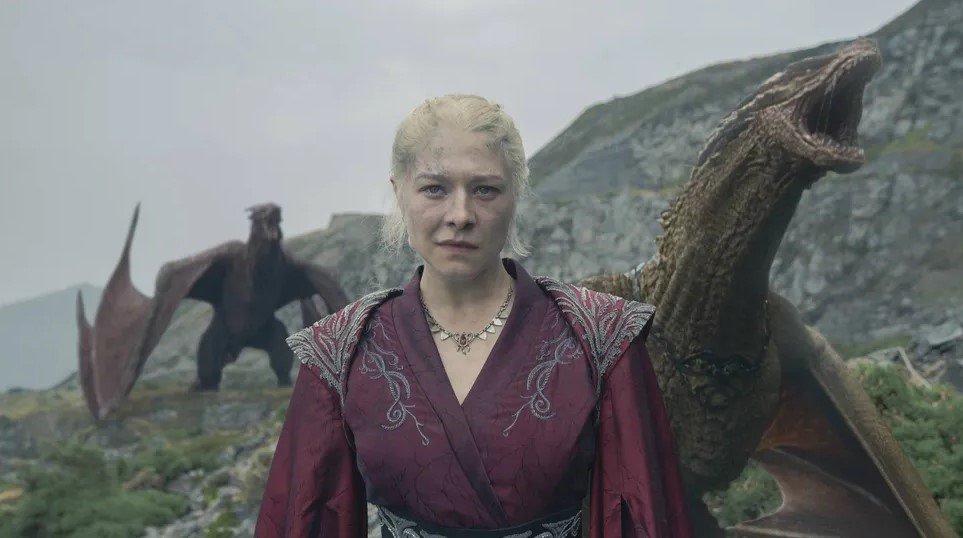
Riderless dragons are not simply unused military assets — they are dangerous, unpredictable creatures in genuine psychological distress.
The dragonseeds explained crisis emerged when Rhaenyra realized that the Black faction’s dragon advantage was eroding faster than it could be replaced through conventional means — and that the riderless dragons at Dragonstone represented a potential military resource that was going to waste.
For context on how dragon bonding works and why it cannot simply be assigned, our Why Some Targaryens Can’t Ride Dragons article covers the full rules and exceptions in detail.
The Dragonstone Call
The dragonseeds explained story reaches its most dramatic moment when Rhaenyra opens Dragonstone to anyone who believes they carry enough Valyrian blood to attempt claiming one of the riderless dragons.
It is an extraordinary act of desperation — a queen essentially advertising that she has dragons nobody can ride and inviting strangers to try.
The dragons available for claiming at Dragonstone included Seasmoke — the dragon of Laenor Velaryon, left riderless when Laenor faked his death — and the wild dragons living in the Dragonmont volcano who had never been ridden at all.
The wild dragons were the most dangerous targets. Seasmoke at least had experience with human riders. The others had no such familiarity — making any attempt to claim them essentially a gamble on whether the dragon’s instincts or the claimant’s blood would win out.
Who Were the Dragonseeds?
The dragonseeds explained in George R.R. Martin’s source text include several figures whose stories the show has been carefully developing.
Alyn of Hull — the acknowledged illegitimate son of Corlys Velaryon, whose bloodline connects him to the Velaryon Valyrian heritage. His growing prominence in House of the Dragon signals that his dragonseed connection will become central to season three’s storyline.
Addam of Hull — Alyn’s brother, also of Velaryon blood, who becomes one of the most significant dragonseed figures in the source material by claiming Seasmoke and proving himself one of the war’s most capable dragonriders.
Rhaena Targaryen — daughter of Daemon and Laena, she is technically not a dragonseed in the traditional sense but has been shown struggling to bond with a dragon of her own throughout season two. Her eventual bonding with the dragon Sheepstealer is one of the most emotionally satisfying character developments in the source material.
Nettles — one of the most discussed and debated dragonseed figures in Fire and Blood. A young girl of unclear parentage who claims the wild dragon Sheepstealer not through blood alone but through a daily offering of sheep — essentially taming the dragon through patience and consistency rather than pure Valyrian heritage. Her story raises the most interesting questions about what dragon bonding actually requires.
The Danger of the Claiming
One of the most important dimensions of dragonseeds explained is just how lethal the claiming process actually was.
Not everyone who attempted to claim a riderless dragon succeeded. Many died — burned, crushed, or simply rejected by dragons who had no interest in a new bond.
The dragonseeds explained mortality rate is part of what makes the storyline so morally uncomfortable for Rhaenyra.
She was essentially sending people — many of them young, many of them common-born — to their potential deaths in the hope that one or two might survive long enough to become useful military assets.
The desperation behind that decision reveals how much the war had already cost the Black faction by the time season three begins — and how far the situation had deteriorated from the confident position the Blacks held at the start of the conflict.
What the Dragonseeds Meant for the War
Dragonseeds explained in military terms produced genuinely significant results for the Black faction — but at a cost that complicated their moral position considerably.
The successful claimings gave Rhaenyra new dragonriders at a point when the war’s attrition had severely depleted her original roster.
But the dragonseeds were not Targaryens. They were not trained riders. They were not politically vetted or socially integrated into the Black faction’s command structure.
Their presence created new tensions — between established noble dragonriders and common-born newcomers, between Rhaenyra’s political instincts and her military needs, and between the loyalty the dragonseeds were expected to show and the treatment they actually received.
The dragonseeds explained arc in the source material includes betrayals, executions, and political crises that directly mirror the broader themes of what the Dance of the Dragons does to everyone it touches.
For the full picture of how the civil war reached the point of needing dragonseeds in the first place, our Dance of the Dragons Explained article covers the war’s complete arc from beginning to end.
How the Show Has Set It Up
House of the Dragon has been laying the groundwork for the dragonseeds explained storyline since season two.
Alyn of Hull’s introduction and his growing relationship with Corlys Velaryon directly signals his importance to the dragonseed plot.
Rhaena Targaryen’s frustrated search for a dragon of her own across season two is a clear setup for her eventual bonding in season three.
And the presence of wild dragons on Dragonmont — shown in season two’s dragonseed-adjacent storyline — establishes the physical setting for the claiming attempts that season three will depict.
Ryan Condal has confirmed that the dragonseed storyline is a major component of season three’s narrative structure — not a subplot but a central thread running through the season alongside the Battle of the Gullet and its aftermath.
Dragonseeds and What They Say About Power
The deepest dimension of dragonseeds explained is what the concept reveals about how power actually works in Westeros.
The entire political system of the Seven Kingdoms is built on the idea that bloodline determines worth — that noble birth confers ability, that the right to rule flows from ancestry rather than capability.
The dragonseed storyline directly challenges that assumption. Common-born people with distant Valyrian heritage are claiming dragons that pure-blooded nobles cannot ride. A girl offering sheep tames a wild dragon that no trained rider could approach.
The dragonseeds explained concept asks what happens when the most powerful military asset in Westeros turns out to be accessible to people the political system was designed to exclude.
For the full story of the Targaryen bloodline that made the dragonseed search possible, our Targaryen Family Tree Explained article traces every branch of the dynasty across three centuries.
Final Thought
Dragonseeds explained is ultimately about what desperation reveals.
The Black faction entered the Dance of the Dragons as the legitimate claimants to the Iron Throne, backed by the most powerful naval family in Westeros and holding more dragons than their enemies.
By the time season three begins they are searching the docks and fishing villages of Driftmark for anyone who might carry enough forgotten blood to survive approaching a grieving dragon.
That arc — from strength to desperation, from legitimacy to survival — is what the dragonseeds explained storyline captures most honestly.
The war does not just cost lives and dragons. It costs the certainties that both factions started with. And the dragonseeds are the clearest evidence of exactly how much has already been lost before season three’s first episode even ends.