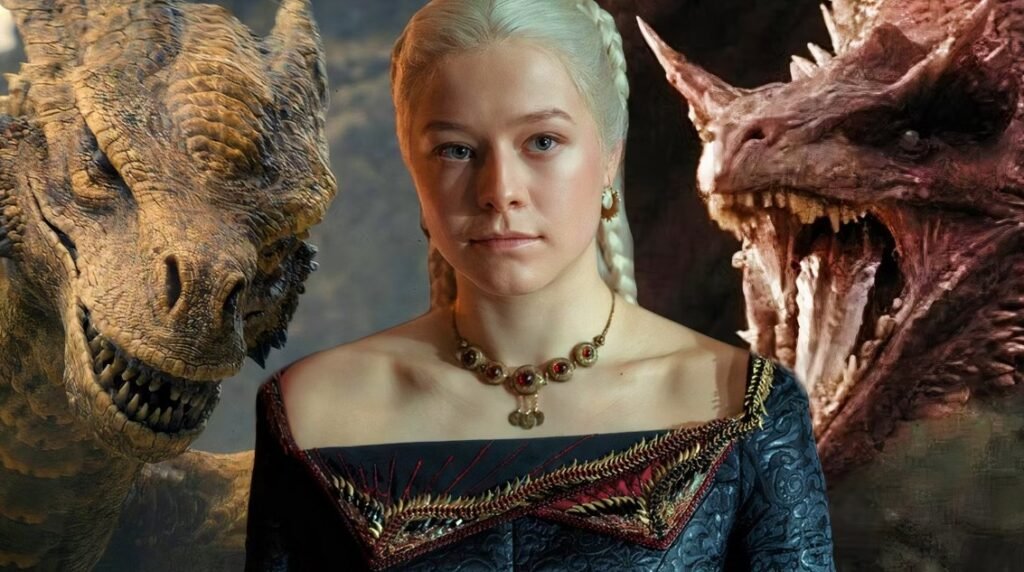
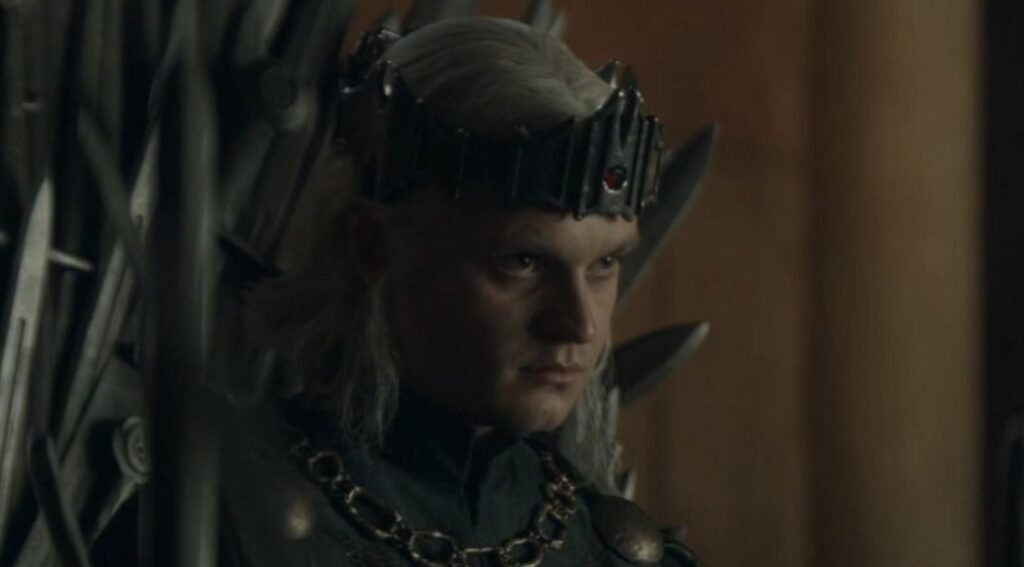
Aegon the Conqueror explained is the foundation of every story the Game of Thrones universe has ever told.
Every conflict in Game of Thrones, every succession crisis in House of the Dragon, every political structure that characters fight over or die defending — all of it was built by one man in one generation.
Aegon the conqueror explained properly is not simply a military history. It is the story of how a single visionary with three dragons and two sister-wives transformed a continent of warring kingdoms into a unified realm — and left behind a political inheritance so unstable that it spent the next three centuries tearing itself apart.
Understanding Aegon is understanding the origin of everything Westeros became.
Who Was Aegon Targaryen Before the Conquest?
Before the conquest, Aegon I Targaryen was the Lord of Dragonstone — a relatively modest island fortress at the mouth of Blackwater Bay, inherited from the remnants of the Valyrian Freehold after the Doom destroyed that civilization.
He was not a king. He had no formal claim to any of the seven independent kingdoms of Westeros.
What he had was Balerion the Black Dread — the largest dragon in recorded history — two sister-wives who were themselves dragonriders, and a strategic vision that no other lord in Westeros could match.
Aegon the conqueror explained begins with this fundamental asymmetry: a man with no crown and no legal claim, but with a military advantage so overwhelming that legal claims became largely irrelevant.
The Three Dragons
No discussion of aegon the conqueror explained is complete without understanding the three dragons that made the conquest possible.
Balerion the Black Dread was Aegon’s dragon — a creature of terrifying scale whose flame could melt stone and whose wingspan could blot out the sun over an entire town. He was the last living dragon who had known Old Valyria before the Doom, and his age and size made him categorically different from every other dragon in the world.
Vhagar was ridden by Aegon’s sister-wife Visenya — a large and powerful dragon who would go on to outlive everyone else involved in the conquest by decades, eventually becoming the largest dragon alive during the Dance of the Dragons roughly 130 years later.
Meraxes was ridden by Aegon’s other sister-wife Rhaenys — fast and fierce, lost along with Rhaenys during the invasion of Dorne when she was killed by a scorpion bolt that pierced her eye.
Together these three dragons gave aegon the conqueror explained its defining military characteristic — the ability to project overwhelming destructive force anywhere on the continent within days.
The Conquest Begins: Landing and Early Victories
Aegon the conqueror explained begins properly in 2 BC — two years Before the Conquest — when Aegon had himself declared King of All Westeros by a septon on Dragonstone, creating a claim he then proceeded to enforce by force.
He landed at the mouth of the Blackwater Rush with a small army and began his campaign.
The early resistance from local lords collapsed quickly once Balerion appeared in the sky. Several castles and towns submitted without a fight simply on the news that Aegon and his dragons were approaching.
Those who did not submit found their fortifications reduced to ash.
The speed of the conquest’s early phase reveals something important about aegon the conqueror explained — the dragons were as effective as a psychological weapon as they were as a physical one.
Harrenhal: The Most Dramatic Moment of the Conquest
The single most iconic moment in aegon the conqueror explained is the destruction of Harrenhal.
Harren the Black, King of the Riverlands and the Isles, had just completed construction of Harrenhal — the largest castle ever built in Westeros, a fortress of such massive scale and thick walls that Harren believed it to be impregnable against any conventional attack.
Harren refused to submit to Aegon.
Balerion melted Harrenhal from the sky.
The towers ran like candles. The stone itself caught fire. Harren and his sons burned alive inside the walls they had spent decades building.
The destruction of Harrenhal sent an unmistakable message to every remaining king in Westeros — there was no fortification that could protect them from dragonfire, and resistance to Aegon was not a military calculation but a death sentence.
For the full story of how that castle’s legacy continued to haunt Westerosi history, our Dance of the Dragons Explained article covers Daemon Targaryen’s later seizure of Harrenhal during the civil war.
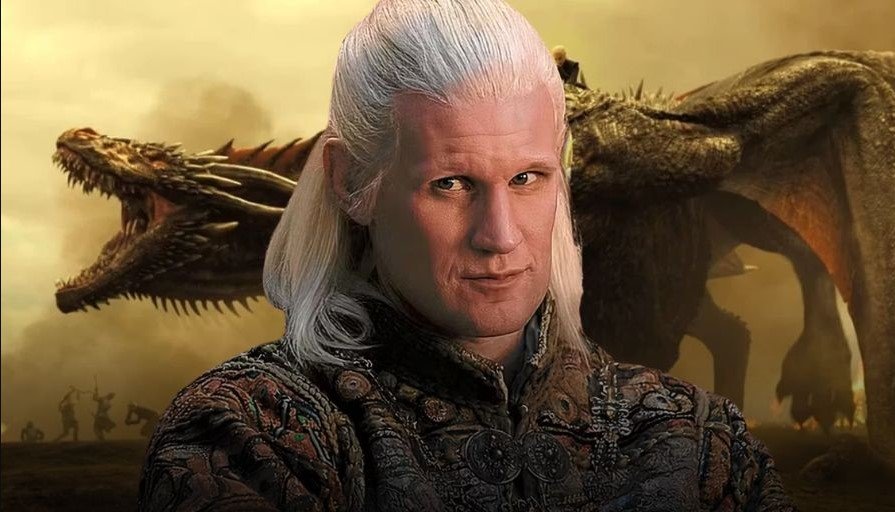
The Field of Fire
The Field of Fire is the largest and most consequential battle in aegon the conqueror explained — the moment when the two most powerful remaining kingdoms in Westeros combined their forces and were still destroyed in a single engagement.
The Kings of the Reach and the Rock — Mern IX Gardener and Loren Lannister — assembled a combined army of roughly 55,000 men and met Aegon’s forces in open battle.
Aegon deployed all three dragons simultaneously for the only time in the entire conquest.
The result was catastrophic for the allied army. The Gardener king and his heirs were killed, ending House Gardener entirely. Loren Lannister survived only by surrendering immediately after witnessing the destruction.
The Field of Fire effectively ended organized military resistance to the conquest from the south and west of Westeros.
House Lannister’s immediate surrender — and Aegon’s decision to accept it and keep Loren as Warden of the West — established the pragmatic approach to governance that defined aegon the conqueror explained as a political project rather than simply a military one.
For more on how House Lannister navigated this submission and the centuries that followed, our House Lannister Westeros Explained article covers the family’s full history in detail.
The North and Dorne: Two Very Different Outcomes
Aegon the conqueror explained did not achieve total uniformity in how different regions of Westeros responded to his campaign.
Torrhen Stark — the King in the North — marched south with a large army to meet Aegon at the Trident. Seeing Aegon’s dragons on the opposite bank of the river, Torrhen sent his maester across to negotiate terms overnight.
The following morning, Torrhen bent the knee rather than fight. He became known forever after as the King Who Knelt — but his decision preserved the North and its people from the dragonfire that had consumed the Gardener line.
Dorne was a completely different story. The Dornish refused to meet Aegon in open battle — instead using guerrilla tactics, sand, and distance to make occupation impossible.
Rhaenys and Meraxes were lost over Dorne when a scorpion bolt killed the dragon and presumably Rhaenys with her. Aegon responded with devastating aerial raids — a period known as the Dragon’s Wroth — but Dorne was never formally conquered during his lifetime.
It did not join the Seven Kingdoms until nearly two centuries later through marriage rather than military force.
Founding King’s Landing and the Iron Throne
Aegon the conqueror explained extends beyond the military campaign into the political structures he built afterward.
King’s Landing was founded on the site where Aegon first landed in Westeros — a deliberate symbolic choice that tied the new capital to the origin of the conquest itself.
The Iron Throne was forged from the swords of defeated enemies — specifically the swords surrendered by lords who bent the knee — melted together by Balerion’s fire into a jagged, uncomfortable seat that Aegon apparently believed a ruler should never sit too easily on.
The Red Keep was begun during his reign, though not completed until later. The Small Council was established to govern the realm. The systems of lordship, taxation, and justice that the entire franchise depicts were formalized during his reign.
For more on how those political systems shaped every succession crisis that followed, our Iron Throne Succession Explained article covers the full legal and political framework Aegon established.
What Aegon Left Behind
Aegon the conqueror explained is not complete without accounting for the inheritance he left — both its strengths and its fatal flaws.
He unified six of the seven kingdoms under a single crown — a genuine political achievement that no previous ruler had managed or even seriously attempted.
But the unity he created was built on terror rather than consent. Most of the houses that bent the knee did so because the alternative was Balerion.
When the dragons eventually died out — a process that began with the Dance of the Dragons and concluded during Aegon III’s reign — the fear that had held the realm together dissolved. What remained was a political structure that had never been tested without the ultimate enforcement mechanism behind it.
The Wars of the Five Kings, Robert’s Rebellion, the Dance of the Dragons — all of them are, in different ways, the story of what happened when the realm Aegon built had to survive without the dragons that made it possible.
Final Thought
Aegon the conqueror explained ultimately reveals a man whose achievement was as brilliant as it was fragile.
He built a unified Westeros in a single generation through military genius, dragon power, and pragmatic political calculation.
He also built a system so dependent on Targaryen supremacy that the moment that supremacy was challenged — from within his own family, as it turned out — the entire structure began to fracture.
The Iron Throne he forged from his enemies’ swords became the most fought-over object in the history of his world. The dynasty he founded nearly destroyed itself within five generations.
Aegon the conqueror explained is therefore not just a story of triumph. It is the origin story of everything that went wrong afterward — and the reason why, three hundred years later, the game of thrones was still being played on a board he designed.