House Lannister Westeros is one of the most recognizable noble families in all of fiction — wealthy beyond measure, politically ruthless, and defined by a pride so deep it functions almost like a religion. In Game of Thrones, House Lannister westeros sits at the center of nearly every major political development across eight seasons. They control the Iron Throne through Cersei’s marriage to Robert Baratheon. They finance the wars that others fight.
They produce some of the most complex and morally contradictory characters in the entire series. Understanding House Lannister westeros means understanding how power actually operates in Westeros — not through righteous bloodlines or noble intentions, but through gold, leverage, and the willingness to do what more honorable families refuse to consider. This is the full story of the Lannisters: where they came from, what made them powerful, and why their dominance ultimately consumed them from within.
The Foundation: Casterly Rock and Lannister Gold
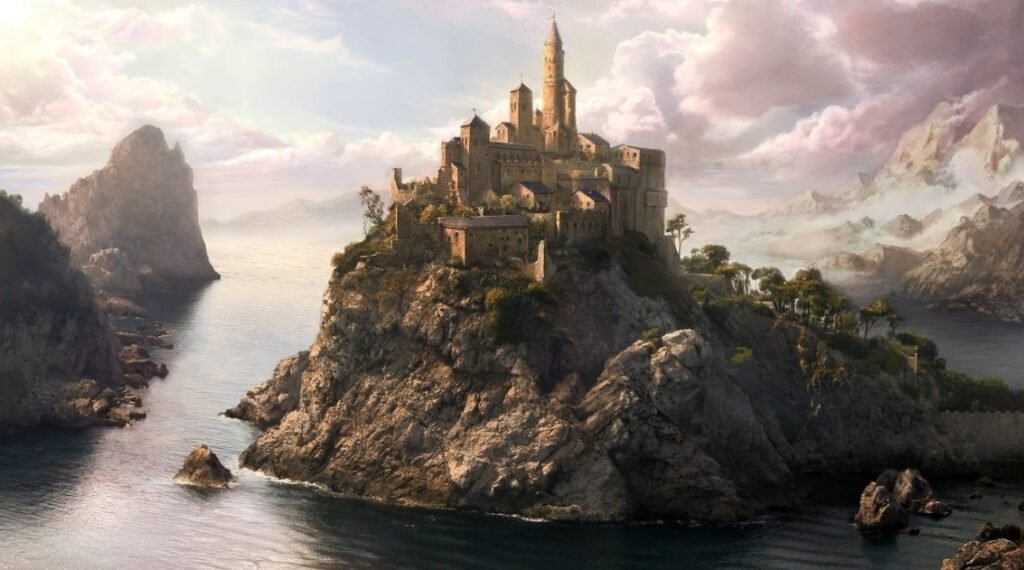
House Lannister westeros draws its foundational power from two things — Casterly Rock and the gold mines beneath it. Casterly Rock is the ancestral seat of the family, a massive fortress built into and around a natural rock formation on the western coast of Westeros overlooking the Sunset Sea. It is one of the most defensible strongholds on the continent, practically impregnable by conventional assault. But the real source of Lannister dominance has always been economic rather than military.
The gold mines of Casterly Rock made House Lannister westeros the wealthiest family in the Seven Kingdoms for generations, giving them the ability to finance armies, buy political alliances, and project influence across the entire realm without ever putting their own soldiers at significant risk. The Lannister words — Hear Me Roar — are rarely spoken aloud in the show. The phrase everyone actually uses is their unofficial motto: a Lannister always pays his debts. That saying captures something true about how the family understands power. Debt, obligation, and the credible promise of either reward or punishment are the real instruments of Lannister control.
Tywin Lannister: The Architect of Lannister Dominance
No discussion of House Lannister westeros is complete without examining Tywin Lannister, the patriarch who transformed a wealthy but politically frustrated house into the dominant force in Westerosi politics. Tywin spent his life undoing the damage his father Tytos had done — a weak, laughed-at lord who allowed other houses to borrow Lannister gold without repayment and permitted bannermen to disrespect the family openly. Tywin’s response was to establish, early and violently, that House Lannister westeros would be feared rather than mocked.
His brutal suppression of House Reyne of Castamere — an event immortalized in the song The Rains of Castamere — sent an unmistakable message to every house in Westeros about what defiance of the Lannisters would cost. Tywin then leveraged his position as the realm’s most powerful lord into the role of Hand of the King under two separate monarchs, effectively running Westeros while others sat on the throne. He was cold, unsentimental, and enormously capable — a man who treated his children as political instruments and his enemies as problems to be solved rather than opponents to be defeated honorably.
Cersei, Jaime, and Tyrion: Three Faces of the Same House
House Lannister westeros produced three children whose stories collectively explore every dimension of what the family name means and costs. Cersei Lannister embodies the family’s hunger for power stripped of any pretense of principle. Married to Robert Baratheon to cement a political alliance, she spent her marriage maneuvering for influence and eventually placed her son Joffrey — not Robert’s child — on the Iron Throne, triggering the War of the Five Kings.
Her arc across Game of Thrones is a study in how the pursuit of power corrupts even the intelligence and capability that made her formidable. Jaime Lannister presents the more tragic version of the Lannister story — a genuinely gifted knight whose reputation was permanently destroyed by a single act, the killing of the Mad King, which was arguably the most morally defensible thing he ever did.
His journey across the series is one of the show’s most compelling examinations of how reputation, guilt, and identity interact. Tyrion Lannister is perhaps the most fully realized character in Game of Thrones — brilliant, self-aware, perpetually underestimated, and carrying the psychological weight of a family that viewed his existence as an embarrassment. All three children of House Lannister westeros are shaped by Tywin’s ruthlessness, and all three are ultimately destroyed or diminished by it in different ways.
Description: The Lannister siblings — Cersei, Jaime, and Tyrion — central figures of House Lannister in Game of Thrones. Alt text: House Lannister westeros — Cersei, Jaime, and Tyrion Lannister, Game of Thrones HBO
The Lannister Political Strategy: Gold Over Glory
What separates House Lannister westeros from families like the Starks or the Tullys is that the Lannisters have always understood politics as a transaction rather than a matter of honor. Where Ned Stark operated on the assumption that doing the right thing would be recognized and rewarded, Tywin Lannister operated on the assumption that power is maintained through consequences — through making every potential enemy understand exactly what opposing the Lannisters will cost them. This philosophy produced the Red Wedding, one of the most shocking events in Game of Thrones, which was orchestrated and financed by Tywin in alliance with House Frey and House Bolton to eliminate Robb Stark and the Northern rebellion in a single coordinated strike.
It was a move that violated every sacred custom of Westerosi hospitality — and Tywin did not hesitate for a moment. For a full breakdown of that event and the family that carried it out, our article on House Frey Westeros Explained covers the Red Wedding in detail. The Lannister approach to the Red Wedding perfectly illustrates why House Lannister westeros was so feared — not because they were the strongest fighters, but because they were willing to win by any means available.
The Decline: When Gold Could Not Save Them
The fall of House Lannister westeros across the later seasons of Game of Thrones is a masterclass in how power built on fear and financial dominance becomes brittle once those foundations crack. The gold mines of Casterly Rock ran dry during the war, eliminating the family’s primary source of leverage. Tywin’s death at Tyrion’s hands removed the only person capable of holding the family’s political position together through sheer force of personality. Cersei’s increasingly erratic decisions — burning the Great Sept of Baelor, alienating key allies, relying entirely on the Mountain and Qyburn for protection — accelerated a decline that began the moment she placed her own emotional needs above the political calculations that had always been the family’s real strength.
By the time Daenerys Targaryen arrived in Westeros with her dragons, House Lannister westeros was a shell of its former dominance — still occupying the Iron Throne but unable to defend it against an opponent who brought the kind of overwhelming force that gold alone could not purchase. Understanding the Lannister collapse is inseparable from understanding the broader question of how succession and power work in Westeros — something our Iron Throne Succession Explained article explores in full.
The Lannister Legacy in the Broader Universe
House Lannister westeros casts a long shadow beyond the events of Game of Thrones itself. In House of the Dragon, set nearly 170 years earlier, the Lannisters appear as a supporting presence in the Targaryen civil war — backing the Green faction and sending Tyland Lannister to negotiate the crucial Triarchy alliance that sets up the Battle of the Gullet. The family’s willingness to attach itself to whichever claimant offers the best return on investment is fully consistent with the Lannister behavior Game of Thrones audiences know well.
The Lannister name recurs throughout Westerosi history precisely because the family’s transactional approach to power is effective in almost every political environment — until it is not. Their story across both shows is ultimately about the limits of that approach, and about what happens to families who optimize entirely for dominance at the expense of every other human value.
Final Thought
House Lannister westeros is the family that Game of Thrones returns to again and again because they represent something permanently true about how power operates. They are not villains in any simple sense — Jaime and Tyrion in particular are among the most sympathetic characters in the series. But House Lannister westeros as an institution embodies a particular and seductive idea: that with enough gold and enough ruthlessness, any problem can be solved. The show’s great achievement is demonstrating, across eight seasons, exactly why that idea is wrong.
The Lannisters lost not because they were outgunned or outmaneuvered — though both eventually happened — but because a family that treats every relationship as a transaction eventually runs out of people willing to be transacted with. The Rains of Castamere plays one last time, and there is no one left to hear it.