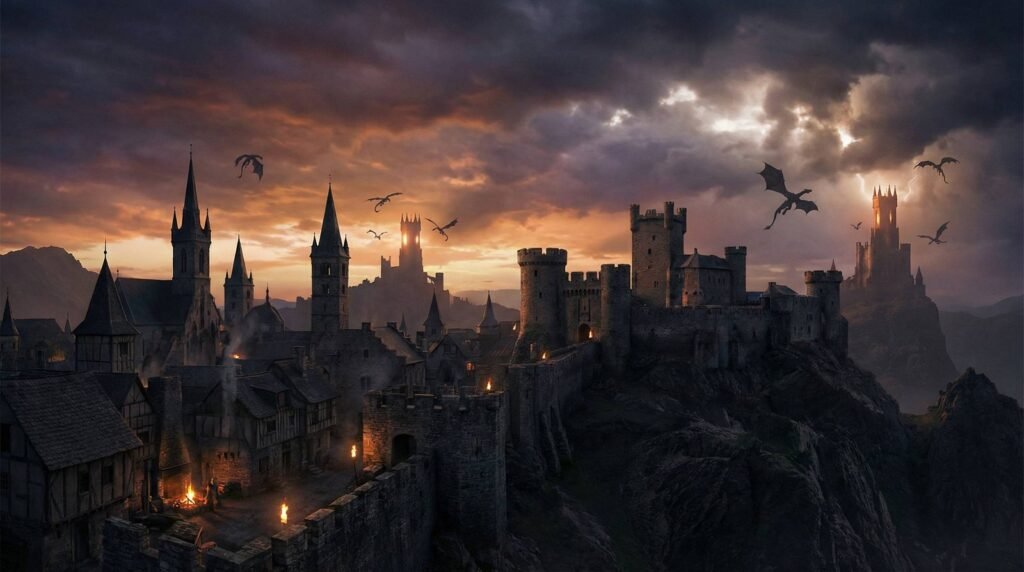
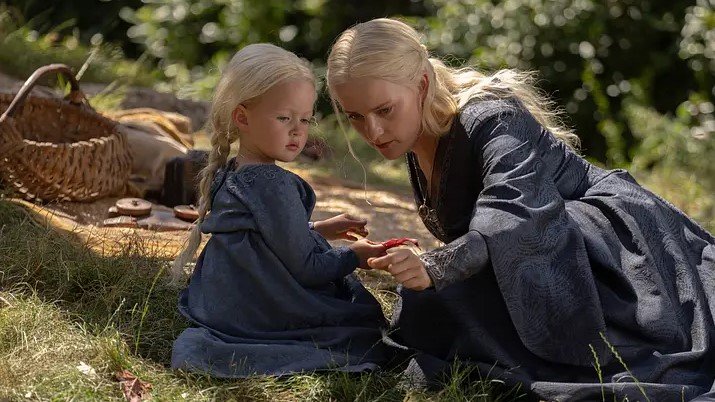
Understanding the Second Dornish War explained reveals one of the most remarkable military anomalies in A Song of Ice and Fire lore. While Aegon the Conqueror melted Harrenhal and crushed the armies of the Reach and the West in open combat, the desert kingdom of Dorne stood firm against the full power of House Targaryen.
The First and Second Dornish Wars proved that even dragons have limitations when facing an enemy that refuses to fight by traditional feudal rules.
The Yellow Toad of Sunspear’s Unyielding Strategy
A key reason behind the Second Dornish War explained was the brilliant asymmetrical warfare strategy devised by Princess Meria Martell, known mockingly by the Targaryens as the “Yellow Toad of Sunspear.”
When Aegon’s sister-wife Rhaenys flew her dragon Meraxes into Dorne, she found castles abandoned and towns completely empty. Meria Martell famously informed Rhaenys:
“We will not fight you, nor will we bow to you. Dorne has no king, and here you will be no queen.”
Rather than assembling massive hosts on open fields where Balerion, Vhagar, and Meraxes could incinerate them, the Dornish retreated into the mountains and deserts, letting the harsh environment drain the invader’s supplies.
The Dragon’s Wroth: Fire and Vengeance
The tactical turning point in the Second Dornish War explained came with the tragic death of Queen Rhaenys Targaryen at the castle of Hellholt. A iron bolt from a Dornish scorpion struck Meraxes through the eye, bringing the massive dragon crashing down and killing Rhaenys.
Devastated by his wife’s death, Aegon I and Queen Visenya unleashed a horrific two-year campaign known as the Dragon’s Wroth:
- Every castle and stronghold in Dorne—except Sunspear—was burned with dragonfire multiple times.
- Bounty rewards were placed on the heads of Dornish lords, leading to widespread assassinations.
- Dornish assassins retaliated by infiltrating the Red Keep, nearly killing Aegon and prompting Visenya to establish the Kingsguard.
Read More here – Aegon the Conqueror Explained: The Ruthless King Who Built Everything Westeros Knows
Key Military Tactics Compared
   Targaryen Offensive Tactics          Dornish Defensive Tactics
┌────────────────────────────────┐   ┌────────────────────────────────┐
│ • Overwhelming Aerial Firepower│   │ • Total Castle Evacuation      │
│ • Direct Castle Siege Assaults │   │ • Scorpion Anti-Air Batteries  │
│ • Decapitation Bounties        │   │ • Poisoned Wells & Scorched Earth│
└────────────────────────────────┘   └────────────────────────────────┘
5 Crucial Reasons Dorne Remained Unconquered
To fully understand the Second Dornish War explained, we must examine why Dorne succeeded where the rest of Westeros failed:
- Absence of Massed Armies: The Dornish refused to form traditional battle lines, depriving dragonriders of concentrated targets.
- Scorpion Defenses: Dornish fortresses were refitted with heavy ballistas designed specifically to target a dragon’s vulnerable eyes.
- Scorched Earth Logistics: Dornish forces poisoned their own wells and burned grain stores as they retreated, starving the occupying ground armies.
- Calculated Non-Targeting of Sunspear: Targaryens intentionally spared Sunspear during raids to trick other Dornish lords into suspecting House Martell of treason—a psychological ploy that ultimately failed.
- Unmatched Popular Loyalty: Unlike the lords of the Reach or Riverlands, smallfolk and nobles in Dorne shared an fierce regional identity that resisted foreign rule.
Read More here – King’s Landing Explained: The Dangerous City That Sits at the Heart of Every Westeros Story
Final Thought
The Second Dornish War explained highlights the defining military lesson of Aegon’s reign: dragons can win battles, but they cannot hold a territory whose people refuse to surrender. Dorne would ultimately join the Seven Kingdoms nearly two centuries later through marriage and diplomacy rather than conquest—proving that the “Yellow Toad” was right all along.