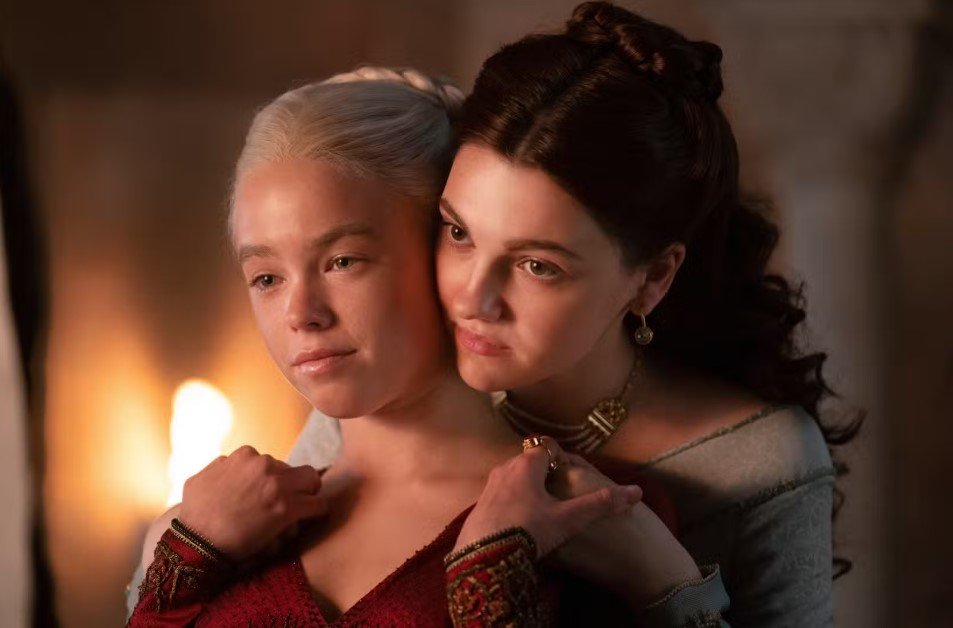
The house of the dragon toxic fandom problem has been building for two seasons.
Now Ryan Condal has called it out directly — describing the behavior of a portion of the show’s online audience as “horrible” and expressing genuine frustration that younger cast members have been targeted for harassment.
Milly Alcock — who played young Rhaenyra in season 1 — has spoken publicly about the harassment she faced from fans who pitted her against Emma D’Arcy, who took over the role in the show’s adult timeline.
Emma D’Arcy themselves has faced coordinated online criticism rooted in their identity rather than their performance.
The house of the dragon toxic fandom is not a fringe issue anymore. It is visible enough that the showrunner felt compelled to address it publicly — and the fandom is now debating what that means for a show entering its most important season.
What Ryan Condal Actually Said
The house of the dragon toxic fandom condemnation from Condal came in a context that made it more striking than the typical showrunner diplomacy.
He described the behavior specifically as targeting young actors — pitting Milly Alcock against Emma D’Arcy in ways designed to demean rather than discuss — and called it “horrible.”
This is not a throwaway comment. Condal is a showrunner who chooses his public words carefully. Describing a portion of his own audience as “horrible” during a pre-premiere promotional cycle is a deliberate choice — a signal that the issue has become serious enough that addressing it publicly outweighs the diplomatic cost of doing so.
The house of the dragon toxic fandom call-out from Ryan Condal is significant precisely because it was unnecessary from a promotional standpoint. He said it because he believed it needed to be said — not because it was strategically advantageous.
Read more: House of the Dragon Season 3 Franchise Legacy: Will It Save or Destroy What Game of Thrones Built?
The Milly Alcock vs Emma D’Arcy Problem
The most specific and longest-running house of the dragon toxic fandom dynamic involves the treatment of Milly Alcock and Emma D’Arcy.
Milly played young Rhaenyra across season 1’s first half — a performance that generated enormous fan enthusiasm and established her as one of the most exciting young actors in prestige television.
When Emma D’Arcy took over the role for the adult timeline, a portion of the fandom used the transition as an opportunity to campaign against D’Arcy rather than simply express appreciation for Alcock.
This is not normal fan engagement with recasting decisions. It is coordinated harassment directed at a performer for reasons that have nothing to do with their work — including, in D’Arcy’s case, commentary about their gender identity.
Milly Alcock has spoken about how distressing it was to watch the fandom she loved weaponize appreciation for her against someone she respected.
The house of the dragon toxic fandom dynamic around recasting is not about Milly or Emma — it is about a portion of the audience that uses the show as a vehicle for prejudice and decides that performer treatment is a legitimate form of fan expression.
Read more: Rhaenyra Targaryen: The Queen Who Refused to Kneel
Why This Is Not Just About Individual Actors
The house of the dragon toxic fandom problem extends beyond specific harassment incidents into something that affects the show’s cultural health more broadly.
Online discourse about House of the Dragon — particularly on X and Reddit — has become increasingly difficult to navigate for casual fans who want to discuss the show without encountering coordinated negativity.
Legitimate criticism of adaptation choices gets mixed with bad-faith harassment in ways that make the two difficult to distinguish. Genuine fan enthusiasm is drowned out in spaces dominated by the loudest and most negative voices.
New viewers discovering the show ahead of season 3 — exactly the audience the show needs to expand its base — are encountering online spaces that are not welcoming to people who have questions or mixed feelings rather than fixed positions.
The house of the dragon toxic fandom is not just hurting the people it directly targets. It is actively narrowing the cultural space available for the show to exist in as a topic of genuine discussion.
Read more: Is House of the Dragon Worth Watching? An Honest Guide for New Viewers in 2026
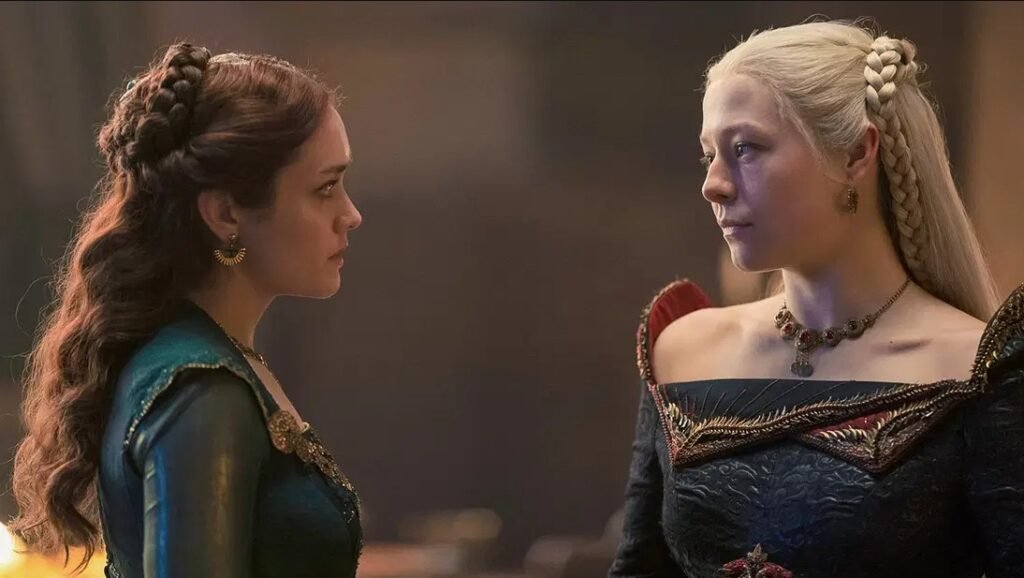
Credit: HBO/Winter is Coming — Alicent and Rhaenyra House of the Dragon production stills
The Team Black vs Team Green Problem
The house of the dragon toxic fandom has a specific structural cause that the show’s creative team inadvertently built in.
By presenting both the Black and Green factions with genuine sympathy — making both Rhaenyra and Alicent understandable if not always right — the show invited the kind of passionate fan identification that generates engagement.
It also invited the kind of passionate faction warfare that turns character preference into moral combat.
Team Black vs Team Green has become one of the most polarized ongoing fandom debates in prestige television — with portions of both camps treating support for their preferred faction as a political identity rather than an entertainment preference.
Performers associated with the opposing faction get targeted. Adaptation choices that benefit one faction over the other generate harassment campaigns. Nuance disappears into tribal positioning.
The house of the dragon toxic fandom team warfare dynamic is particularly difficult to address because it is structurally encouraged by the show’s own moral ambiguity — the same quality that makes it dramatically excellent creates the conditions for the worst fan behavior.
Read more: Why Team Black Is Quietly Falling Apart Before House of the Dragon Season 3
What Good Fandom Looks Like
The house of the dragon toxic fandom discussion is worth having not to condemn fan enthusiasm — which is genuinely valuable and sustains the show’s cultural presence — but to distinguish between engagement that helps and engagement that harms.
The majority of House of the Dragon’s audience watches, discusses, theorizes, and debates in ways that are enthusiastic without being harmful. Reddit communities produce genuinely excellent analysis. Fan accounts amplify content, build anticipation, and welcome new viewers.
The toxic minority is disproportionately loud — its volume in online spaces does not reflect its size in the actual audience.
But volume matters in the information environment, and the house of the dragon toxic fandom voices that reach new viewers first shape those viewers’ first impressions of the community they are being invited into.
Read more: House of the Dragon Season 3 Countdown: Everything You Need to Know Before June 21
Frequently Asked Questions
Why did Ryan Condal call the House of the Dragon fandom horrible? Condal specifically referenced the behavior of fans who pitted younger cast members against each other — particularly the harassment directed at Emma D’Arcy and the use of appreciation for Milly Alcock as a vehicle for attacking D’Arcy. He described this behavior as “horrible” during a promotional appearance ahead of season 3.
Who has been targeted by the House of the Dragon toxic fandom? Emma D’Arcy and Milly Alcock have both publicly addressed the harassment they faced — D’Arcy for their identity and performance choices, Alcock for being positioned as a target of fan approval in contrast to D’Arcy. The house of the dragon toxic fandom has also directed coordinated negativity at other cast members associated with unpopular character arcs.
Is the House of the Dragon fandom generally toxic? No — the majority of the show’s audience engages constructively and enthusiastically. The house of the dragon toxic fandom is a vocal minority whose behavior receives disproportionate attention in online spaces. Reddit, fan accounts, and most social media discussion reflects genuine enthusiasm rather than harassment.
What is the Team Black vs Team Green fandom debate? The show’s moral ambiguity — presenting both factions with genuine sympathy — has produced a fandom culture where faction loyalty functions as identity rather than preference. The house of the dragon toxic fandom Team Black vs Team Green dynamic at its worst involves harassment of performers associated with opposing factions and dismissal of nuanced analysis in favor of tribal positioning.
Final Thought
The house of the dragon toxic fandom problem will not be resolved before June 21. It will not be resolved after it either.
What Ryan Condal’s public call-out does is establish clearly that the show’s creative leadership sees the behavior, considers it harmful, and is willing to say so publicly rather than absorbing it as an unavoidable cost of cultural prominence.
That matters. Not because condemnation changes behavior — it rarely does — but because it signals to the performers being targeted that the people responsible for the show they are part of are paying attention and do not accept what is happening to them as normal.
House of the Dragon deserves the fandom its best work has earned. June 21 is the opportunity for that fandom — the majority, the genuine enthusiasts, the people who love this story — to be the loudest voices in the room.
Read more: House of the Dragon Season 3 Is HBO’s Biggest Risk Yet