House of the Dragon explained for new viewers — answers to the most common questions about characters, timeline, dragons, and how it connects to Game of Thrones.
House of the Dragon explained for new viewers is one of the most searched topics among people who discovered the show after Game of Thrones or came to it completely fresh. The series dropped audiences into a world already deep in Targaryen history, with a large cast of characters, competing political factions, and a civil war building across two seasons.
For anyone who felt lost in the first episode — or who wants to understand what they are walking into before pressing play — this guide answers the questions that matter most. No deep lore expertise required. Just clear, honest answers to what new viewers actually want to know before, during, and after watching House of the Dragon for the first time.
Do You Need to Watch Game of Thrones First?
This is the first question almost every new viewer asks, and the honest answer is no — but it helps. House of the Dragon is set approximately 170 years before the events of Game of Thrones, so the two shows do not share characters or direct plotlines. You will not be lost without having watched Game of Thrones first.
However, familiarity with the world of Westeros, the Iron Throne, and the basic political structure of the Seven Kingdoms does make House of the Dragon easier to settle into. If you have watched Game of Thrones, you will recognize references, locations, and family names that add a layer of meaning to what you are watching. If you have not, the show is still fully followable on its own terms.
What Is House of the Dragon Actually About?
At its core, House of the Dragon is about a civil war within the Targaryen family — the ruling dynasty of Westeros — fought over who has the right to sit on the Iron Throne. The conflict, known in the books as the Dance of the Dragons, begins when King Viserys I names his daughter Rhaenyra as his heir, bypassing the traditional male succession. When Viserys dies, his wife Alicent Hightower and her faction place her son Aegon on the throne instead, directly contradicting the king’s wishes.
Two sides form — the Blacks supporting Rhaenyra, and the Greens supporting Aegon — and Westeros descends into a devastating war fought not just with armies but with dragons. The show is fundamentally a tragedy about how a powerful family destroys itself from within.
Who Are the Most Important Characters to Know?
New viewers are often overwhelmed by House of the Dragon’s large cast, but the story centers on a relatively small group of key figures. Rhaenyra Targaryen is the protagonist — a princess who was named heir to the throne and spends the series fighting to claim what she was promised. Alicent Hightower is her childhood friend turned political rival, whose loyalty to tradition and her own sons puts her directly in Rhaenyra’s path.
Daemon Targaryen, Rhaenyra’s uncle, is the show’s most magnetic figure — dangerous, brilliant, and deeply complicated in his loyalties. King Viserys I sits at the center of the first season, a well-meaning king whose inability to make hard decisions sets every tragedy in motion. Everyone else in the cast connects back to these four in some way.
How Many Dragons Are There and Do They Matter?
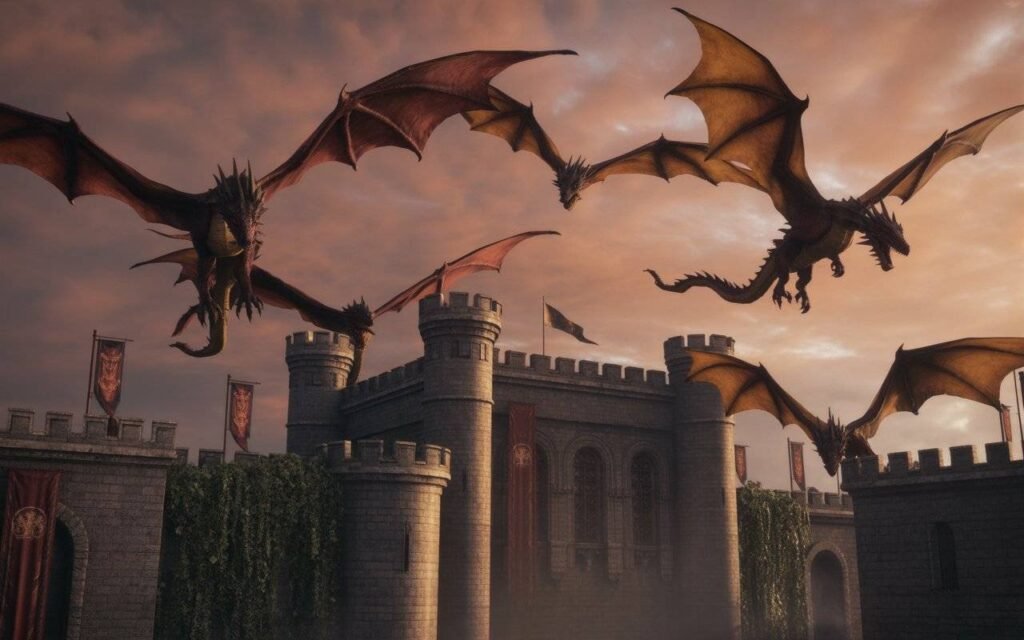
Dragons matter enormously in House of the Dragon — far more than they did in Game of Thrones, where only three existed and all belonged to Daenerys. During the Dance of the Dragons, both factions control multiple dragons, and the creatures function almost like military assets with personalities.
Each dragon has a name, a history, and a specific rider, and the shifting of dragon allegiances during the war has real political consequences. New viewers do not need to memorize every dragon immediately, but paying attention to which dragons belong to which characters helps track the military balance between the two factions as the war escalates across season two.
Why Does the Show Jump Forward in Time So Much?
One of the most disorienting things for new viewers in season one is the use of significant time jumps between episodes. Characters age, relationships shift, and children are suddenly adults without much transition. This was a deliberate creative choice to compress the years of political maneuvering that preceded the civil war into a single season.
The time jumps can be jarring, particularly when the actresses playing Rhaenyra and Alicent are recast midway through the season to reflect their older ages. The best approach is to treat each episode almost like a chapter in a book — accepting that time has passed and focusing on where each character stands emotionally and politically rather than trying to track every year precisely.
What Is the Difference Between the Blacks and the Greens?
The Blacks and the Greens are the two factions at the heart of the Targaryen civil war, and understanding the difference between them is essential for following the show’s politics. The Blacks are Rhaenyra’s faction, named for the Targaryen dynastic colors of black and red. They believe Rhaenyra is the rightful heir as designated by her father King Viserys.
The Greens are Alicent’s faction, named for the green dress she wore to a significant feast — a moment that became a political signal. They believe the throne should pass through the male line to Aegon, regardless of Viserys’s stated wishes. Most of the great houses of Westeros are eventually forced to choose a side, and those choices determine the shape of the war.
Is Season Two a Good Place to Start?
Starting with season two is not recommended. The second season picks up directly where the first ended, with the war already underway and the emotional stakes built entirely on relationships and losses established in season one. Without that foundation, many of the most powerful moments in season two will lack context and impact.
Season one is ten episodes and moves deliberately in its first half before accelerating significantly toward its conclusion. The investment in season one pays off considerably once season two begins, and the show rewards viewers who understand how the characters arrived at the war rather than simply dropping into the middle of it.
How Does House of the Dragon Connect to Game of Thrones?
The connection between House of the Dragon and Game of Thrones is historical rather than direct. The events of House of the Dragon take place roughly 170 years earlier and involve ancestors of characters familiar from Game of Thrones. The Targaryen dynasty that Daenerys represents in Game of Thrones is the same one fighting for survival in House of the Dragon.
The Dance of the Dragons, the civil war at the center of the prequel, had lasting consequences for the Targaryen line — including a dramatic reduction in the number of living dragons — that shaped the dynasty’s trajectory for generations. Viewers who have watched both shows will recognize how the seeds of Targaryen decline visible in Game of Thrones were planted during the events depicted in House of the Dragon.
Final Thought
House of the Dragon explained for new viewers ultimately comes down to one core piece of advice: trust the story enough to let it unfold at its own pace. The show is dense, political, and emotionally demanding in ways that reward patience. The first season builds slowly and deliberately before delivering some of the most affecting dramatic moments in the entire Thrones universe.
The civil war at its center is not a simple conflict between heroes and villains — it is a tragedy in which almost everyone is right about something and wrong about something else, and in which the real casualties are trust, family, and an entire generation of dragons that Westeros will never see again. New viewers who go in with that understanding will find House of the Dragon one of the richest fantasy dramas currently on television.