Understanding The Hellscape Stranger Things explained is crucial for separating the three distinct interdimensional realms featured across Netflix’s Stranger Things mythology. While casual viewers often assume Eleven banished Henry Creel directly into the Upside Down in 1979, the Duffer Brothers and official production designers confirmed that Henry actually fell through a far more hostile cosmic void known as the Hellscape.
Existing as a volatile bridge between the human world, the Upside Down, and Dimension X, this chaotic storm realm physically remade Henry Creel into Vecna. Examining The Hellscape Stranger Things explained unlocks the true mechanics of interdimensional travel and reveals how Hawkins became trapped in an alien ecosystem.
What Is the Hellscape in Stranger Things?
A core foundation in The Hellscape Stranger Things explained is understanding how the series’ cosmology is structured. Rather than a single alternate dimension, the Stranger Things universe operates across multiple interconnected layers:
- The Rightside Up (Earth): The standard human dimension anchored in Hawkins, Indiana.
- The Upside Down: A dark, decaying snapshot of Hawkins frozen in time on November 6, 1983, the exact day Eleven opened the Mother Gate.
- The Hellscape: An unstable, lightning-ravaged interdimensional chasm filled with floating rock formations, crimson storms, and toxic atmospheric energy.
- Dimension X: The alien homeworld beyond the chasm where Demogorgons, vines, and the swirling particles of the Mind Flayer originated naturally.
When eight-year-old Eleven overpowered Henry Creel in the Rainbow Room on September 8, 1979, her psychic blast punched a temporary tear straight into the Hellscape rather than creating a stable gate.
How the Hellscape Transformed Henry Creel Into Vecna
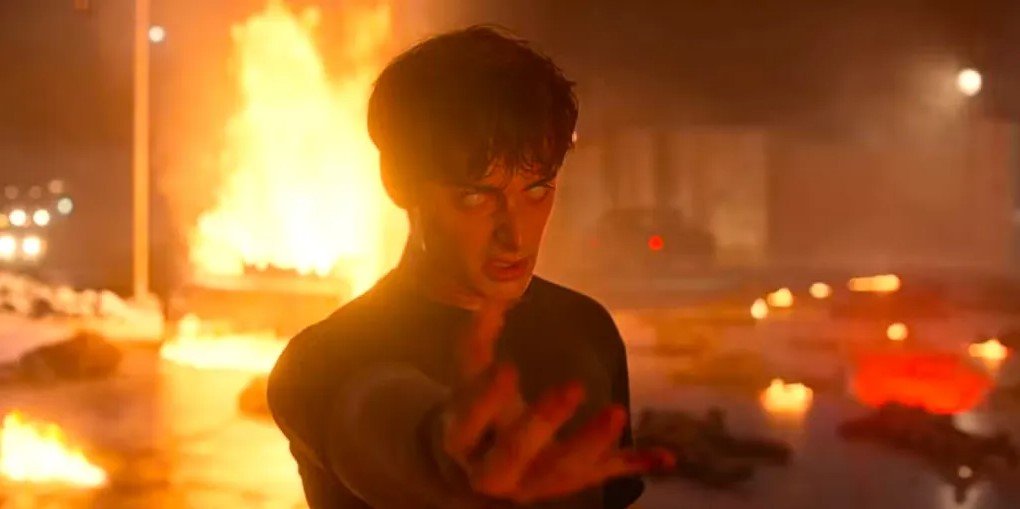
Another pivotal element of The Hellscape Stranger Things explained lies in the horrific physical transformation Henry endured while falling through the chasm. Unlike the Upside Down—where Will Byers and Jim Hopper survived for days without immediate bodily mutation—the Hellscape is completely uninhabitable for human biology.
Read More here –
As Henry tumbled through the floating boulders and red lightning storms:
- Atmospheric Combustion: High-voltage crimson lightning repeatedly struck his body, searing away his skin, hair, and human features.
- Psychic Preservation: Only Henry’s immense telekinetic willpower prevented him from being disintegrated entirely before breaking through into Dimension X.
- Fungal Symbiosis: Upon crashing onto the barren terrain of Dimension X, Henry’s burned body fused with the native alien vines and hive-mind spores, completing his rebirth as Vecna.
6 Secrets Revealed About the Hellscape and Dimension X
To grasp the full significance of The Hellscape Stranger Things explained, we must examine six critical lore details established by the creators and visual effects teams:
- The Hellscape Is a Buffer Zone: Official concept art labels the Hellscape as an unstable interdimensional gap separating our reality from Dimension X—acting like a violent membrane that tears apart anything passing through unprotected.
- Why the Upside Down Looks Like Hawkins: The Upside Down did not exist prior to November 6, 1983; it was created the instant Eleven made psychic contact with a Demogorgon across the Hellscape, copying Hawkins’ physical geography into the void.
- The Origin of the Red Lightning: The iconic red lightning storms seen inside the Upside Down are actually atmospheric bleed-over from the Hellscape pressing against the edges of Hawkins.
- Henry Explored Dimension X Unopposed: After surviving the Hellscape, Henry spent four years mapping Dimension X, discovering the unformed shadow particles that he shaped into the spider-like Mind Flayer.
- Why Gates Require Massive Energy: Opening a doorway across the Hellscape demands either colossal psychic trauma (like Vecna’s four ritual murders in 1986) or immense electromagnetic power (like the Soviet Key beneath Starcourt Mall).
- The Rift Network Threat: Whenever multiple gates open simultaneously in Hawkins, the Hellscape’s volatile storms begin bleeding directly into the Rightside Up, rotting crops and fracturing the earth.
Comparing the Four Realms of Stranger Things
Why Understanding the Hellscape Matters for the Lore
The deeper value of The Hellscape Stranger Things explained lies in how it resolves major continuity questions across the franchise. Fans previously wondered why Dimension X looked like a barren alien desert when Henry arrived in 1979, whereas the Upside Down looked like an exact dark reflection of Hawkins in 1983.
Read More here –
By distinguishing the Hellscape from Dimension X and the Upside Down, the mythology establishes a clear scientific logic: the Hellscape is the storm between worlds, Dimension X is the alien source, and the Upside Down is the infected bridge built in Hawkins’ image.
Final Thought
The The Hellscape Stranger Things explained guide reveals that Eleven’s greatest childhood triumph inadvertently unleashed Hawkins’ worst nightmare. By hurling Henry Creel through the Hellscape rather than destroying him, she sent a vengeful telepath into an alien realm full of apex predators—setting the stage for every battle fought by Eleven and her friends years later.