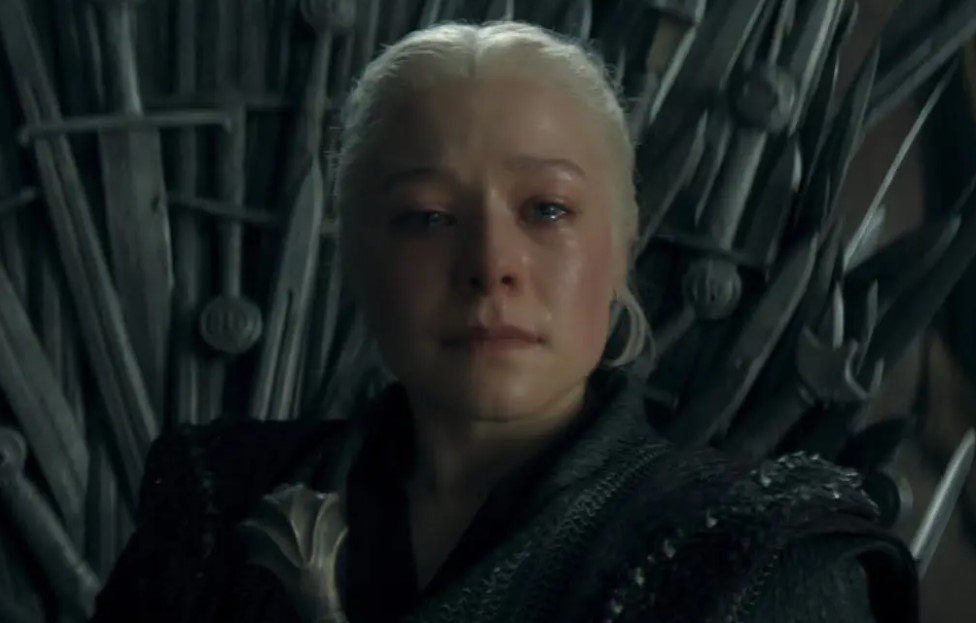
Rhaenyra the Cruel Iron Throne Season 3 is no longer a pre-premiere prediction. It is the show’s current reality — and after Episode 2’s blood-soaked footsteps and Otto Hightower’s decapitated head, the nickname has found its activation point.
The live article on WesterosBrief established what the name means in theory. This is what it means now that she has actually sat down.
Rhaenyra the Cruel and the Iron Throne in Season 3 are now the same image — a queen who took the city Alicent opened for her, executed the man responsible for the war she never wanted, and left a trail of blood between the act and the seat. That sequence, in sixty seconds of television, explains everything about how a person becomes “the Cruel” without being cruel.
Table of Contents
- How Otto’s Execution Activated the Nickname
- What King’s Landing Sees That Rhaenyra Doesn’t
- The Maegor Comparison and Why It Sticks
- What Rhaenyra the Cruel Has to Do to Make the Throne Mean Something
- Whether the Name Can Be Unmade
1. How Otto’s Execution Activated the Nickname
Rhaenyra the Cruel Iron Throne Season 3 begins with Otto Hightower’s death — not because it was cruel in the conventional sense, but because it was the first thing she did.
The sequence matters. Rhaenyra did not arrive in King’s Landing, sit the throne, address the smallfolk, establish her court, and then — after careful deliberation — execute her most dangerous political enemy. She executed Otto, walked to the throne in his blood, and sat down. The execution preceded the reign by approximately ninety seconds.
For King’s Landing’s population, watching from the street while three dragons circled overhead, the signal could not have been clearer: the new queen’s first act was a death. Two deaths, including Jasper Wylde, by the end of the day. Rhaenyra the Cruel Iron Throne Season 3 begins not with the formal assumption of power but with what power does immediately.
This is how nicknames are made. Not through sustained cruelty — through a single visible act at a moment when everyone is watching. The smallfolk who saw Rhaenyra arrive peacefully and heard her say she came to restore order also saw what happened to Otto Hightower. The gap between those two things is where “Rhaenyra the Cruel” starts to be written on walls.
Rhaenyra the Cruel Iron Throne Season 3 is the name that forms in the gap between what she said she was and what the city watched her do on the first day.
Read more: Why Did Rhaenyra Kill Otto Hightower in House of the Dragon Season 3 Episode 2?
2. What King’s Landing Sees That Rhaenyra Doesn’t
Rhaenyra the Cruel Iron Throne Season 3 is a name given by people who do not have Rhaenyra’s context — and that is precisely what makes it stick.
Rhaenyra knows why she executed Otto. The political logic is sound. A living Otto is permanently dangerous. The show gave viewers Daemon’s argument in full, and it is a defensible argument. The problem is that King’s Landing’s smallfolk do not have access to that argument. They have access to the outcome.
They have been hungry for months because of the Velaryon blockade — a blockade Rhaenyra’s faction maintained. They watched the Gullet battle from a distance, knowing their food situation depended on which side won. They watched dragons circle their city again. They watched a queen arrive and tell them she came to restore order.
And then they heard about Otto Hightower’s head.
Rhaenyra the Cruel Iron Throne Season 3 is the name that forms in the space between the queen’s internal justification and the city’s external experience. She knows she had to. They know she chose to. Both are true. The name is the city’s version of events — and once a name is written on walls, it does not require accuracy to persist.
Read more: Rhaenyra Sits the Iron Throne in Season 3 Episode 2: What That Moment Really Means
3. The Maegor Comparison and Why It Sticks
Rhaenyra the Cruel Iron Throne Season 3 nickname is not random. It is a specific comparison — to Maegor I Targaryen, known as Maegor the Cruel — and understanding why that comparison sticks reveals what her enemies are doing with it.
Maegor the Cruel was one of the worst kings in Westerosi history by almost any measure — a tyrant who murdered political opponents, ordered the deaths of builders who knew too much, and maintained power through systematic violence rather than governance. Being compared to Maegor is not simply an insult. It is a deliberate framing device — placing Rhaenyra in a lineage of Targaryen brutality that delegitimises her claim to the throne she just sat.
The comparison is calculated propaganda. Rhaenyra is not Maegor. She did not build her reign on terror. She executed two political enemies on the first day of her occupation and has not, by the end of Episode 2, committed anything approaching Maegor’s systematic atrocities.
But that is not what propaganda requires. Rhaenyra the Cruel Iron Throne Season 3 nickname requires only that the comparison be made loudly enough, early enough, to shape how the city receives everything that comes after. Her enemies — including the Green faction remnants operating in and around King’s Landing — have every incentive to make that comparison stick before she has time to establish a contrasting narrative.
Read more: House of the Dragon Season 3 Episode 2 Fan Reactions: How the Internet Responded to Queen’s Landing
4. What Rhaenyra the Cruel Has to Do to Make the Throne Mean Something
Rhaenyra the Cruel Iron Throne Season 3 is the problem the next five episodes of the show have to solve — or make even worse, depending on the choices Rhaenyra makes.
She has the throne. She has King’s Landing. She has Alicent’s grudging presence in the Red Keep, Gwayne Hightower still within the walls, and a city that watched her arrive with three dragons and leave an execution on the first day.
What she does not have is stability. Aemond is at Harrenhal with Vhagar. Aegon II is heading toward Criston Cole at Rook’s Rest. The Hightower army is still marching north under Ormund. Hugh and Ulf are somewhere in the field with two unaccounted-for dragons. And Rhaenyra herself is sitting a throne she is still processing the cost of, in a city that has not yet decided whether it wants to love or hate her.
Rhaenyra the Cruel Iron Throne Season 3 is the season testing whether she can govern — not just conquer. The name was always going to follow taking the city. What follows it depends entirely on what kind of queen she chooses to be in the six episodes the show still has to show us.
Read more: Mysaria’s Rise in House of the Dragon Season 3: Why Daemon Is Worried About Her Influence
5. Whether the Name Can Be Unmade
Can Rhaenyra the Cruel Iron Throne Season 3 be undone? The honest answer from the source material is: not entirely. The name follows her in Fire and Blood. It is how the city’s graffiti remembers her. It is the comparison her enemies used.
But the show has been more careful than the source material about making Rhaenyra’s cruelty legible from multiple perspectives rather than simply presenting it as fact. The lived version of Rhaenyra the Cruel in the show is not a queen who chose brutality — it is a queen who chose political necessity at the worst possible optics moment, in a city already primed to receive her badly.
Whether she can unmake the name depends on what she does with the throne now that she has it. Feed the city — the Gullet blockade can end now. Release the political prisoners who present no genuine threat. Let Alicent be visible and alive. These are the moves that a queen trying to govern rather than simply occupy would make.
Whether grief lets her make them — whether the loss of Jace and the weight of Otto’s execution and the fragility of every alliance she holds has left her with the capacity for patient governance — is the question the season is building toward.
Rhaenyra the Cruel Iron Throne Season 3 may be inevitable. The kind of Cruel she becomes is still in play.
FAQ: Rhaenyra the Cruel Iron Throne Season 3
Where does the nickname “Rhaenyra the Cruel” come from?
In George R.R. Martin’s Fire and Blood, Rhaenyra earned the nickname “the Cruel” from her detractors after occupying King’s Landing — a comparison to Maegor I Targaryen, known as Maegor the Cruel, one of the worst kings in Westerosi history. The name originated with the smallfolk and the Green faction’s remaining supporters.
What did Rhaenyra do to earn the nickname “the Cruel” in Season 3?
The most significant act after taking King’s Landing was executing Otto Hightower — the architect of the succession crisis and the war’s political foundation — on the first day of her occupation. She also ordered the execution of Jasper Wylde. These acts, staged before she had established a governing presence in the city, became the basis for the nickname.
Is Rhaenyra the Cruel actually cruel in House of the Dragon Season 3?
The show presents Rhaenyra’s actions as politically defensible rather than simply cruel — Otto alive is permanently dangerous, and Daemon’s logic for the execution is sound. The nickname reflects the city’s external experience of those decisions rather than Rhaenyra’s internal justification, making it a product of propaganda and framing as much as factual assessment.
Who is Maegor the Cruel and why is Rhaenyra compared to him?
Maegor I Targaryen — Maegor the Cruel — was a Targaryen king widely considered one of the worst rulers in Westerosi history, known for systematic violence and terror-based governance. Comparing Rhaenyra to Maegor was a deliberate political move by her enemies, designed to delegitimise her reign through association rather than accurate description.
Can Rhaenyra undo the “Cruel” nickname in Season 3?
In the source material, the nickname persists. In the show’s version, whether Rhaenyra’s governance of King’s Landing in the remaining episodes creates a contrasting narrative depends on decisions the show has not yet made. Her capacity to govern rather than simply occupy — feeding the city, managing alliances carefully — is the most plausible route to complicating the nickname without erasing it.
How does the Rhaenyra the Cruel arc affect Alicent’s storyline?
Alicent delivered King’s Landing and watched Rhaenyra execute her father on arrival. Whatever Rhaenyra does next — whether she moves toward mercy or continues in the mode that earned the nickname — will determine what Alicent becomes in the episodes following Episode 2.
The Throne Is Won. The Name Is Forming.
Rhaenyra the Cruel Iron Throne Season 3 is the season’s central dramatic problem — wearing a nickname she did not choose, sitting a throne she bled for, governing a city that is already deciding what to call her.
She arrived with dragons and left an execution. The name was going to find her regardless. What she does with the next five episodes determines whether it fits her exactly or sits awkwardly on a queen the show has been telling us, since Season 1, was never going to be what her enemies needed her to be.
Five episodes remain. Rhaenyra the Cruel Iron Throne Season 3 is only just beginning.