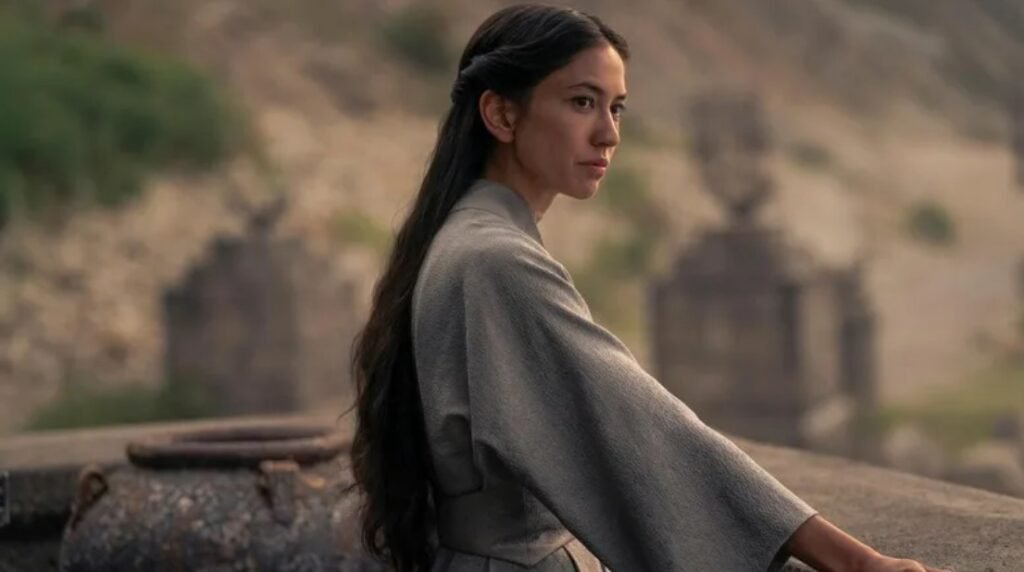
Mysaria explained is one of the most compelling character studies in the entire House of the Dragon universe — and one that the show has developed far more richly than the source material provided.
She began as Daemon Targaryen’s mistress — a dancer from Lys with no family, no name, and no standing in Westerosi society.
She became Mysaria the White Worm — the most effective spymaster on either side of the Dance of the Dragons, a woman whose network of informants inside King’s Landing gives Rhaenyra’s Black faction intelligence advantages that no military victory could have purchased.
Mysaria explained properly is the story of what survival looks like when someone builds it entirely from intelligence and will rather than birth or power.
Who Is Mysaria?
Mysaria is a woman of Lysene origin — brought to Westeros as a dancer and eventually becoming Daemon Targaryen’s lover and companion before their relationship fractured under the pressure of Westerosi political reality.
She has no great house behind her. No family name. No dragon and no army.
What she has is information. And in a war where intelligence determines military outcomes as much as firepower does, information is an asset of extraordinary value.
Mysaria explained at her most fundamental is this: a woman who was given nothing by the world she was born into, who built everything she has through observation, patience, and an absolute refusal to be dismissed as irrelevant.
Her History With Daemon
The mysaria explained origin story in Westeros is inseparable from her relationship with Daemon Targaryen — the man who brought her to the continent and whose protection initially gave her enough stability to begin building her own independent position.
Daemon was not a gentle patron. He loved her in his particular way — intense, consuming, and ultimately constrained by the political realities he could not escape.
When she became pregnant with his child, Daemon sent her away rather than acknowledge her — an act that cost her the pregnancy and broke whatever uncomplicated affection had existed between them.
The Mysaria who emerged from that experience was no longer simply Daemon’s companion. She was something the Westerosi political world was entirely unprepared for — a woman with nothing to lose and everything to gain from watching the powerful destroy each other.
The mysaria explained transformation from Daemon’s lover to the White Worm is the show’s most quietly devastating origin story.
Read more: Daemon Targaryen Explained
The White Worm: Building a Network
The mysaria explained spymaster arc begins in earnest as the political tensions that would produce the Dance of the Dragons began to crystallize at court.
Operating from the shadows of King’s Landing, Mysaria built a network of informants — servants, smallfolk, merchants, and others who existed below the notice of the great houses but who moved through spaces where secrets were kept and decisions were made.
Her network gave her access to information that neither the Green nor the Black faction’s formal intelligence operations could match — not because she was more capable than the maesters and lords who served them, but because she understood that the most reliable intelligence comes from the people that powerful men ignore.
The White Worm’s greatest advantage was that no one powerful enough to stop her thought she was worth stopping.
The mysaria explained intelligence operation became one of Rhaenyra’s most valuable assets precisely because it operated in a register that neither faction’s conventional political thinking could account for.
Read more: Small Council Explained
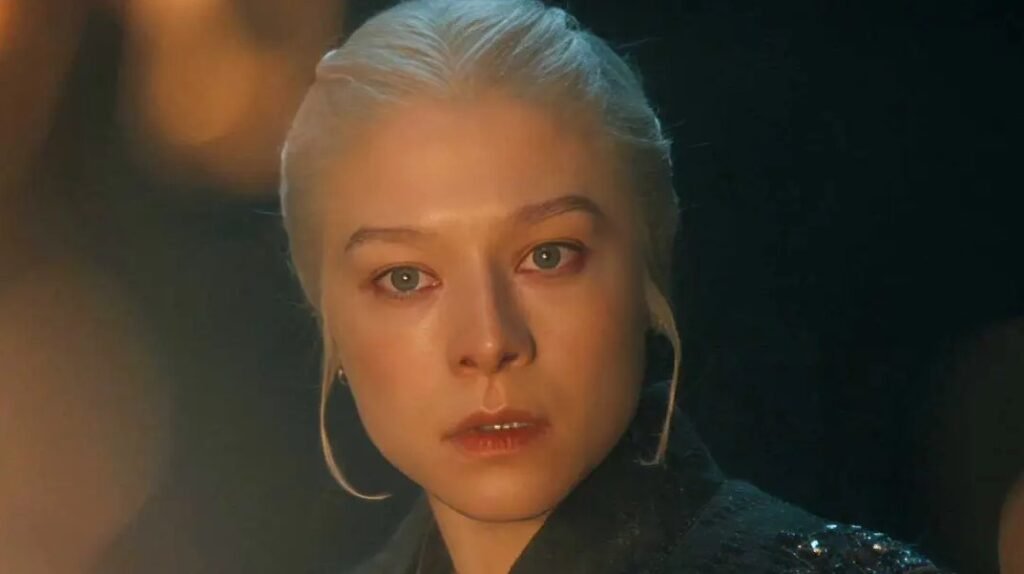
Credit: Image via Winter is Coming — Mysaria House of the Dragon coverage © HBO/Max
Her Relationship With Rhaenyra
One of the most important dimensions of mysaria explained is how her relationship with Rhaenyra developed from mutual suspicion into something more closely resembling political partnership.
Rhaenyra has reason to distrust Mysaria — her history with Daemon, her independent operation, and the fundamental unpredictability of someone whose loyalty is not guaranteed by birth or faction commitment.
Mysaria has reason to be cautious of Rhaenyra — a queen who could eliminate her as a political inconvenience at any moment if she decided the intelligence network’s value was outweighed by its independence.
What keeps them in productive alignment is mutual utility. Mysaria provides intelligence that Rhaenyra cannot obtain through conventional means. Rhaenyra provides the political legitimacy and protection that allows Mysaria’s network to operate without being systematically dismantled by Green faction counter-intelligence.
The mysaria explained dynamic with Rhaenyra is therefore one of the show’s most honest depictions of how power actually works — not through loyalty or affection, but through the careful management of mutual interest.
Read more: Rhaenyra Targaryen Explained
The Blood and Cheese Connection
The mysaria explained involvement in one of House of the Dragon’s most disturbing events is significant and morally complicated.
Blood and Cheese — the assassins hired by Daemon to kill a son of Aegon II in retaliation for Lucerys’s death — were apparently coordinated through Mysaria’s network.
Her role in that operation — whether she facilitated it, knew about it in advance, or was simply used as a conduit — is one of the show’s most carefully maintained ambiguities.
What the Blood and Cheese incident reveals about Mysaria is that her intelligence network can be weaponized in ways that go far beyond information gathering — that the White Worm’s operation is capable of facilitating acts of violence whose consequences she cannot fully control.
That moral complexity is central to mysaria explained as a character study — a woman whose tools are genuinely dangerous and whose users do not always share her understanding of what those tools can do.
Read more: Helaena Targaryen Explained
Mysaria in Season Three
The mysaria explained season three arc places her in an increasingly central position as the war escalates beyond the intelligence-gathering phase into direct military confrontation.
She is confirmed as a returning cast member for season three — Sonoya Mizuno listed among the core ensemble alongside Emma D’Arcy, Matt Smith, and Olivia Cooke.
As Rhaenyra’s forces move toward King’s Landing, Mysaria’s network inside the city becomes strategically critical — providing real-time intelligence about Green faction positions, military preparations, and the political vulnerabilities that any occupation would need to exploit.
The mysaria explained season three position is therefore one of significantly increased importance — a character who was a supporting presence in seasons one and two moving into a role that the war’s escalating stakes demand she fill.
What Makes Mysaria Different
The mysaria explained character works as well as it does because the show has been consistent about what drives her — not ideology, not faction loyalty, not personal vengeance for any single specific wrong.
What drives Mysaria is the determination never to be powerless again. Never to be the person who has nothing and no one and is therefore disposable.
Every choice she makes — every informant she cultivates, every piece of intelligence she trades, every alliance she maintains — is in service of that determination.
Mysaria is not a hero or a villain. She is a survivor who understood the rules of the game of thrones long before anyone thought to include her in it — and who decided that the only safe position was one where she knew more than everyone else.
That clarity of purpose is what makes her one of the show’s most consistently compelling supporting figures.
Read more: Iron Throne Succession Explained
Final Thought
Mysaria explained is ultimately the story of what intelligence looks like when it is deployed by someone who had to build their survival from nothing.
She came to Westeros with no name that mattered, no family that could protect her, and no position in the social order that gave her any claim to consideration.
The mysaria explained arc across three seasons is the story of how she turned those absences into advantages — using the invisibility of the powerless to see what the powerful could not, and building from that visibility a position that no lord or lady in Westeros could fully dismantle.
In a show about dragons and dynastic warfare, Mysaria is the reminder that the most durable power is the kind that survives when the dragons are gone.
She is the White Worm. And in the Dance of the Dragons, that may matter more than anyone expected.
Read more: House of the Dragon Season Three Watch Guide