
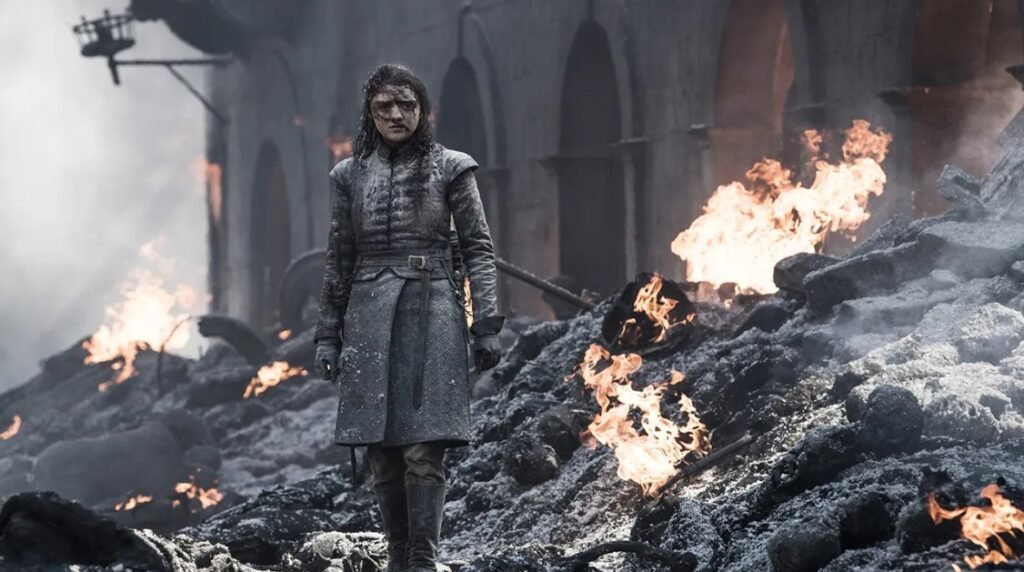
King’s landing explained is the foundation of almost everything that happens in the Game of Thrones universe.
It is where the Iron Throne sits. It is where the Small Council meets. It is where the most consequential political decisions in Westerosi history have been made, betrayed, and unmade.
King’s landing explained properly reveals something more complex than simply a capital city — a place whose geography, political culture, and relationship with its own population has shaped every conflict in the franchise from Aegon’s original conquest through to the Dance of the Dragons and beyond.
Understanding King’s Landing is understanding the physical heart of everything Westeros fights over.
How King’s Landing Was Founded
The king’s landing explained origin begins with Aegon I Targaryen — the Conqueror — and the specific moment he first set foot on the mainland of Westeros.
Aegon landed at the mouth of the Blackwater Rush — the river that flows into the bay where the city now stands — at the beginning of his conquest of Westeros.
He camped on a low hill that overlooked the river mouth and the bay. That hill — later called Aegon’s High Hill — became the site of the Red Keep.
King’s landing explained as a founding moment reveals Aegon’s strategic intelligence. The location gave him a natural harbor, access to river trade through the Blackwater Rush, and a defensible position on high ground overlooking both the water and the surrounding terrain.
For the full story of the man who chose this location and what his conquest achieved, our Aegon the Conqueror Explained article covers the founding of the Targaryen dynasty in complete detail.
The City’s Geography
The king’s landing explained physical layout is defined by three hills and the bay — a geography that shaped both the city’s development and its political culture.
Aegon’s High Hill — the tallest of the three — holds the Red Keep, the seat of royal power and the most defensible position in the city.
Visenya’s Hill holds the Great Sept of Baelor — the spiritual center of the Faith of the Seven and the institutional home of the religion that legitimizes the monarchy.
Rhaenys’s Hill holds the Dragonpit — or held it, before the Dance of the Dragons reduced it to a ruin that still stands as one of the city’s most imposing structures three centuries later.
The three hills reflect the three figures of the original conquest — Aegon, Visenya, and Rhaenys — built into the literal geography of the capital they founded together.
The Red Keep
The king’s landing explained story cannot separate the city from its most dominant structure — the Red Keep, the castle that sits on Aegon’s High Hill and contains both the Iron Throne and the labyrinthine political machinery of the Westerosi crown.
The Red Keep is not simply a castle. It is a city within a city — containing the throne room, the small council chamber, the Tower of the Hand, the Maidenvault, Maegor’s Holdfast, the great hall, the dungeons, and the famously extensive network of secret passages that run through its walls.
The king’s landing explained relationship with the Red Keep is one of tension as much as identity. The castle is visually dominant — its red stone visible from anywhere in the city — but its connection to the population below is permanently contested.
The smallfolk of King’s Landing have never fully trusted the institution on the hill above them. And the institution on the hill has never fully understood the city it governs.
For context on the political body that operates from within the Red Keep, our Small Council Explained article covers the governing institution that actually ran Westeros day to day.
The Smallfolk of King’s Landing
One of the most important and consistently underexplored dimensions of king’s landing explained is the city’s population — the hundreds of thousands of ordinary people whose lives are shaped by decisions made in the Red Keep above them.
King’s Landing is not a comfortable city for its poorest residents. The Flea Bottom district — the city’s slum quarter — is notorious across Westeros for its poverty, its violence, and the so-called bowls of brown that constitute its most common food.
The king’s landing explained relationship between the smallfolk and the great events that surround them is one of the franchise’s most consistent themes. They suffer through sieges they did not choose. They starve when blockades cut off food supplies. They die when wildfire threatens to burn the city or when foreign armies fight for control of streets they live on.
The Storming of the Dragonpit — the mob uprising that killed five dragons during the Dance of the Dragons — is the clearest expression of what happens when King’s Landing’s smallfolk finally direct their accumulated rage at the symbols of power above them.
For the full story of that event and what it cost both factions, our Storming of the Dragonpit Explained article covers it in complete detail.
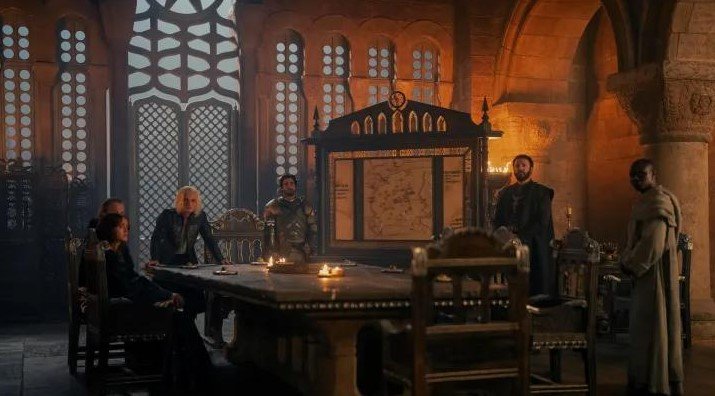
Credit: Image via Winter is Coming — King’s Landing in Game of Thrones and House of the Dragon © HBO
King’s Landing in the Dance of the Dragons
The king’s landing explained role in House of the Dragon’s civil war is central rather than peripheral — the city is not simply the backdrop for the conflict but one of its primary objectives.
The Green faction controls King’s Landing from the beginning of the war — it is where Aegon II was crowned and where the Green Council meets and governs.
Rhaenyra’s strategy throughout the war has been designed to strangle King’s Landing rather than assault it directly — using the Velaryon fleet’s blockade of the Gullet to cut off the city’s food and supply lines while building her ground forces for an eventual invasion.
The king’s landing explained trajectory in season three moves toward one of the most anticipated events in the source material — Rhaenyra’s occupation of the city, the Storming of the Dragonpit, and the political chaos that follows.
The Wildfire Beneath the City
One of the most disturbing elements of king’s landing explained is the network of wildfire caches hidden beneath the city — a legacy of Mad King Aerys II’s paranoid final years.
Aerys ordered his pyromancers to hide enormous quantities of wildfire at strategic points throughout King’s Landing — beneath the Great Sept, beneath the castles, beneath the Dragonpit — with the intention of burning the entire city rather than letting Robert Baratheon take it.
Jaime Lannister killed Aerys before the order could be carried out — an act that saved hundreds of thousands of lives and earned him the Kingslayer name that defined his reputation for the rest of his life.
The king’s landing explained wildfire threat was not resolved by Jaime’s act — only deferred. The caches remained beneath the city for decades, eventually used by Cersei Lannister to destroy the Great Sept of Baelor in Game of Thrones season six.
For the complete story of the act that stopped Aerys and what it cost the man who committed it, our Roberts Rebellion Explained article covers the uprising that brought King’s Landing to that crisis point.
What King’s Landing Represents
The king’s landing explained symbolic significance goes beyond its function as a capital city.
It is the physical embodiment of the Iron Throne’s promise — the idea that one city, one ruler, and one council can govern an entire continent of competing peoples, cultures, and interests.
Every time that idea is tested in the franchise — through war, siege, occupation, or internal collapse — King’s Landing is where the testing happens.
The city has been threatened, taken, burned, blockaded, and rebuilt more times than any other location in Westerosi history. It survives each crisis not because it is strong but because it is necessary — the infrastructure of governance, trade, and symbolic authority that makes the Seven Kingdoms function as a political unit.
Final Thought
King’s Landing explained is ultimately the story of what a capital city actually costs — in lives, in suffering, in the gap between the idea of unified governance and the reality of power exercised from a castle on a hill.
It was built by conquest and maintained by force. It was built to last and nearly destroyed multiple times by the very rulers sworn to protect it.
The king’s landing explained story across both Game of Thrones and House of the Dragon is the story of a place that everyone fights to control and nobody knows how to govern — a city whose people have always paid the price for decisions they had no part in making.
That is what makes it the heart of Westeros. Not its beauty or its power. But its cost.