Storming of the Dragonpit explained is one of the most important and least understood events in the entire Dance of the Dragons.
Most casual viewers of House of the Dragon know the Dragonpit as the massive domed structure in King’s Landing where the Targaryens housed their dragons. They may not know what happened to it — or what its destruction meant for the dynasty that built it.
The storming of the dragonpit explained in full is the story of how ordinary people, driven to desperation by famine and war, turned on the most powerful creatures in the world — and won.
It is one of the most viscerally disturbing events in Westerosi history, and its consequences permanently altered the trajectory of the Targaryen dynasty.
What Was the Dragonpit?
Before the storming of the dragonpit explained can be fully understood, it is important to know what the Dragonpit actually was.
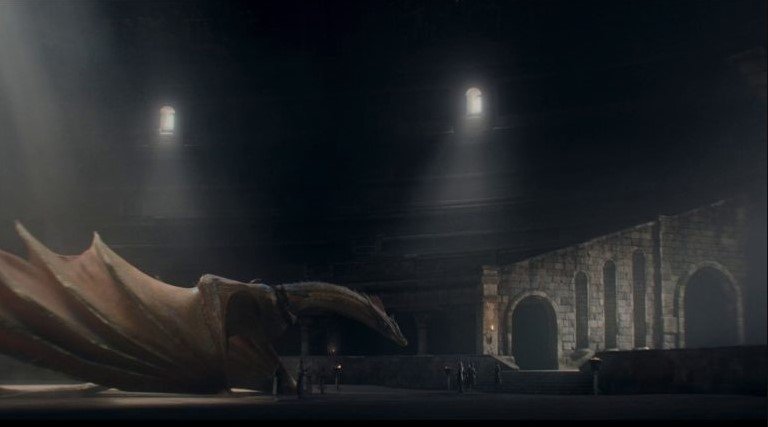
The Dragonpit was a massive domed structure built into the Hill of Rhaenys — one of the three hills on which King’s Landing stands — designed specifically to house the Targaryen dragons when they were not being ridden.
It was enormous. Contemporary accounts describe it as the largest domed building in Westeros, its ceiling high enough to allow dragons to spread their wings inside.
The Dragonpit represented the physical embodiment of Targaryen power in King’s Landing — a constant reminder to the city’s population that the ruling family possessed creatures of overwhelming destructive force.
That symbolic weight made it a target when the city’s relationship with its rulers finally broke down completely.
What Caused the Storming
The storming of the dragonpit explained begins not with dragons but with bread.
The Velaryon blockade of the Gullet — maintained throughout the Dance of the Dragons to strangle King’s Landing’s supply lines — had been catastrophically effective.
Food prices in the city had risen beyond what ordinary people could afford. The smallfolk were hungry, desperate, and watching their children suffer while the great houses above them conducted a dynastic war over a throne they had no stake in.
The city’s smallfolk did not love Aegon II. They did not love Rhaenyra either. What they felt toward both claimants was a growing fury that the war existed at all — that their lives were being destroyed by a family dispute among people who had never once considered their welfare.
The storming of the dragonpit explained in political terms is therefore the story of what happens when rulers exhaust the patience of the people they govern — and when those people finally identify a target for their rage.
For context on how the blockade created the conditions for this uprising, our Battle of the Gullet Explained article covers the naval strategy that strangled King’s Landing’s supply lines.
Who Instigated the Storming
The storming of the dragonpit explained in Fire and Blood is presented as a spontaneous popular uprising — a mob that assembled organically and moved on the Dragonpit without central coordination.
The show’s version appears to add political instigation to the source material’s more spontaneous account.
Production reports and casting information for season three suggest that figures within the Green faction — or its allied interests — may have deliberately inflamed the population’s existing anger to direct it toward a specific target.
If this adaptation choice holds, the storming of the dragonpit explained in season three becomes something more morally complex than a simple mob event — a manufactured uprising in which desperate people were weaponized by political actors who understood what the destruction of the Dragonpit would mean for both factions.
This kind of adaptation choice is consistent with the show’s broader approach — preferring motivated political action over historical contingency, making individual choices visible and consequential rather than leaving events to emerge from impersonal forces.
What Happened During the Storming
The storming of the dragonpit explained in its physical reality was one of the most chaotic and violent events in King’s Landing’s history.
A massive mob breached the Dragonpit’s gates and flooded into the structure where the dragons were housed.
The dragons inside — none of them ridden at the moment of the attack — were chained and partially restrained, which limited their ability to defend themselves as effectively as they would have in open combat.
The mob brought weapons specifically designed for the purpose — scorpion bolts, spears, and other projectiles capable of penetrating dragon hide if aimed at vulnerable points like the eyes, throat, and wing joints.
What followed was a brutal, chaotic engagement in which the crowd’s numbers and desperation overcame the dragons’ individual power.
Five dragons died in the Dragonpit that day — Shrykos, Morghul, Tyraxes, Dreamfyre, and the hatchling Stormcloud.
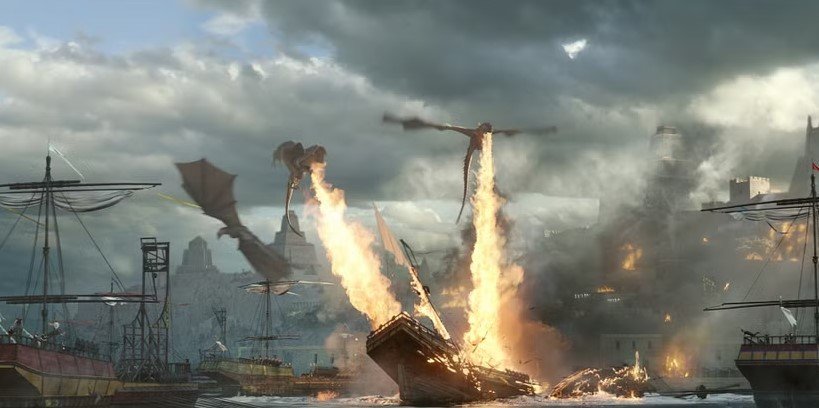
Credit: Image via FandomWire — House of the Dragon Season 3 Storming of the Dragonpit © HBO/Max
The Five Dragons That Died
The storming of the dragonpit explained in terms of its dragon casualties is one of the most devastating single events in the franchise’s history.
Shrykos — a young dragon whose rider Jaehaerys had already been killed in the Blood and Cheese incident — was killed in the storming. His death compounded the grief already surrounding that earlier assassination.
Morghul — the dragon of Princess Jaehaera, Aegon and Helaena’s surviving daughter — was also killed. The loss of her dragon left Jaehaera completely without the dynastic assets that might have given her a meaningful future.
Tyraxes — the dragon of Prince Joffrey Velaryon, Rhaenyra’s youngest son — was killed when Joffrey attempted to ride him into the chaos to stop the mob. The attempt ended with both dragon and rider dead, adding another Velaryon prince to the war’s casualty list.
Dreamfyre — the dragon most closely associated with Helaena Targaryen — was killed in the storming in circumstances that directly connected the dragon’s fate to her rider’s psychological collapse. The death of Dreamfyre is one of the most emotionally resonant losses in the storming of the dragonpit explained, given what Helaena had already endured.
Stormcloud — a young hatchling — was also lost, representing the destruction of the dynasty’s future dragon potential as much as its present military capacity.
For the full story of Helaena and what the loss of Dreamfyre meant for her already-shattered mental state, our Helaena Targaryen Explained article covers her complete arc.
What the Storming Cost the War
The storming of the dragonpit explained in military terms was catastrophic for both factions simultaneously — which is what makes it so significant.
The Green faction lost Shrykos, Morghul, and Dreamfyre — three dragons that, while not currently ridden by active combatants, represented potential future assets and dynastic symbols.
The Black faction lost Tyraxes and Stormcloud — including one of Rhaenyra’s sons.
Both sides lost something irreplaceable in a single night of mob violence. The storming of the dragonpit explained in strategic terms permanently reduced the total dragon population of Westeros at exactly the moment both factions needed every dragon they could field.
It also sent an unmistakable political message. The smallfolk of King’s Landing — the population both factions claimed to be fighting for — had turned on the dragons that defined Targaryen power. The legitimacy both claimants had been fighting over was eroding in real time, consumed by the very war that was supposed to establish it.
For the broader context of what the dragon losses meant for the war’s outcome, our Dance of the Dragons Explained article covers the complete civil war and its devastating toll.
The Long-Term Consequences
The storming of the dragonpit explained does not end with the night of the attack. Its consequences extended across generations.
The Dragonpit itself was never restored to its original purpose. It stood as a ruined structure in King’s Landing for the next century and a half — a visible monument to the moment the city’s population rejected the most powerful symbol of Targaryen authority.
By the time of Game of Thrones, the Dragonpit is a derelict ruin used occasionally for political gatherings — the location where Jon Snow presents a wight to Cersei Lannister in season seven. Its history as the site of dragon deaths has been largely forgotten by the show’s contemporary characters, but it remains physically present in the city’s landscape.
The storming of the dragonpit explained in the longest possible view is therefore one of the key moments in the decline of Targaryen power — the night the dynasty lost not just five dragons but the psychological aura that had made the mere presence of dragons sufficient to command obedience.
For more on how the Targaryen dynasty declined from its peak to the Mad King’s reign, our Targaryen Family Tree Explained article traces every generation from the conquest to Game of Thrones.
What Season Three Will Show
The storming of the dragonpit explained is confirmed to appear in House of the Dragon season three — premiering June 21, 2026 on HBO and Max.
Production reports indicate the show is staging the event on a significant scale — consistent with Ryan Condal’s description of season three as the most ambitious production the show has attempted.
The show’s version appears to frame the storming with more deliberate political instigation than the source material’s more spontaneous account — a change that will give individual characters agency in triggering the event rather than presenting it as pure historical accident.
Whether that instigation comes from within the Green faction, from independent political operators, or from another source entirely has not been confirmed. But the adaptation choice signals that the storming of the dragonpit explained in the show will carry specific human accountability that the book’s version leaves more diffuse.
For everything confirmed about what season three will contain, our House of the Dragon Season Three Watch Guide covers everything viewers need to know before June 21.
Final Thought
Storming of the Dragonpit explained ultimately reveals something profound about the Dance of the Dragons and about power itself.
The Targaryens built their dynasty on the assumption that dragon power was so overwhelming that no ordinary person would ever dare challenge it directly. For three generations that assumption held.
The storming of the dragonpit explained is the moment it stopped holding — the night when hungry, desperate, ordinary people decided that dying in an attempt to kill a dragon was preferable to continuing to live under the consequences of a war fought over a throne they had no voice in choosing.
They won. Five dragons died. And the Targaryen dynasty never fully recovered from the realization that the people it claimed to rule were capable of turning on the very symbols of its power.
Win or die. The smallfolk of King’s Landing chose to fight — and in doing so, they changed the course of Westerosi history forever.