Introduction: One World, Many Eras
The world of Game of Thrones was never meant to end with a single story. What began as a brutal tale of power in Westeros has quietly evolved into a carefully structured television universe — one that spans centuries, dynasties, wars, and legends.
From ancient dragonlords to wandering hedge knights, every Game of Thrones series fits into a shared timeline shaped by bloodlines, betrayals, and long-forgotten choices. Understanding how these shows connect doesn’t just enhance the viewing experience — it reveals HBO’s long-term strategy for keeping Westeros alive on screen for years to come.
This guide breaks down how all Game of Thrones shows connect, where each series sits in the timeline, and why these connections matter more than ever.
The Foundation of Westeros: A Single Shared History
All Game of Thrones series exist within the same fictional world created by George R. R. Martin. While the tone and scale may change, they share:
- The same noble houses
- The same political structures
- The same geographic map
- The same historical events, referenced differently across eras
What HBO is building is not separate spinoffs — it’s a layered historical saga, where earlier stories deepen the meaning of later ones.
The Earliest Era: Aegon’s Conquest (The Unseen Beginning)
Timeline placement: ~300 years before Game of Thrones
Although not yet released as a series, Aegon’s Conquest forms the bedrock of every story that follows.
This era explains:
- How the Seven Kingdoms became one realm
- Why the Iron Throne exists
- Why dragons became symbols of absolute power
Every Targaryen conflict — including those in House of the Dragon — traces back to this moment when fire and fear reshaped Westeros forever.
Why it matters:
Without Aegon’s Conquest, there is no Iron Throne, no united Westeros, and no Game of Thrones.
House of the Dragon: The Targaryens at Their Peak
Timeline placement: ~200 years before Game of Thrones
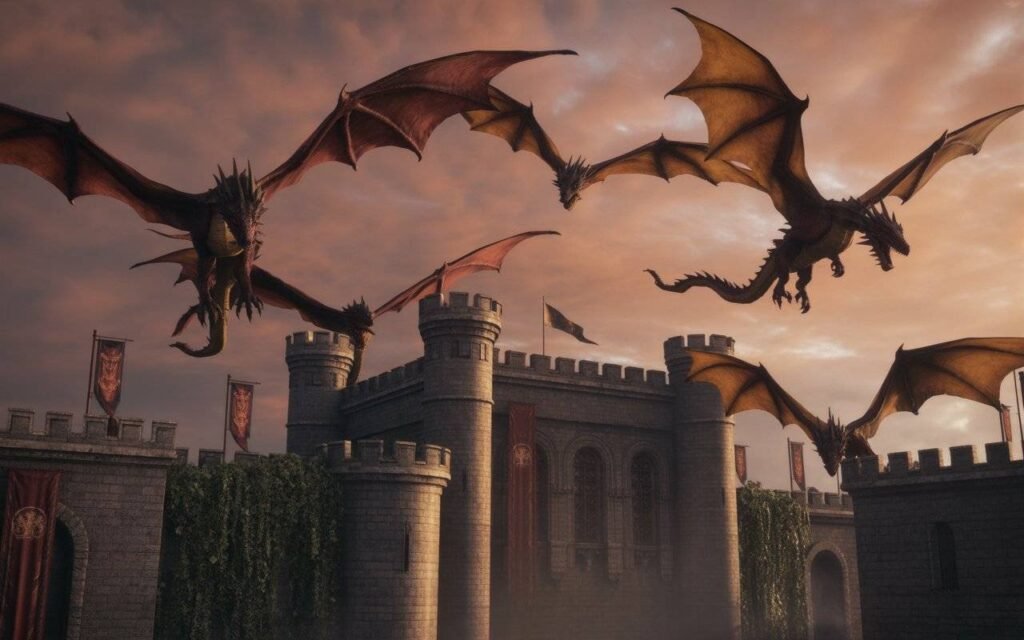
House of the Dragon explores the height of Targaryen dominance — when dragons filled the skies and the family ruled unchallenged.
Key connections to the main series:
- Explains why dragons eventually disappear
- Shows the internal fractures that weaken House Targaryen
- Introduces ancestral versions of houses like Stark, Hightower, Velaryon, and Baratheon
The infamous civil war known as the Dance of the Dragons becomes the turning point that begins the slow collapse of Targaryen supremacy.
Connection payoff:
The downfall Daenerys struggles against in Game of Thrones begins right here.
A Knight of the Seven Kingdoms: Westeros Between Wars
Timeline placement: ~90 years before Game of Thrones
This series shifts focus away from kings and dragons and toward the ordinary lives shaped by history’s aftermath.
Set decades after House of the Dragon:
- Dragons are nearly extinct
- Targaryens still rule, but without their greatest weapon
- The realm is calmer — yet deeply fragile
Through Ser Duncan the Tall and his young squire Egg, the story reveals:
- How small choices echo through history
- How future kings are shaped long before they wear crowns
Egg’s true identity connects this quieter tale directly to the royal lineage seen in the main series.
Why it’s important:
This show acts as the human bridge between epic dynastic wars and the chaos to come.
Game of Thrones: The Fall of the Old World
Timeline placement: Present day (the anchor point)
The original Game of Thrones is the culmination of centuries of tension:
- A weakened monarchy
- Fractured noble houses
- Legends fading into myths
- Magic returning when no one is ready
Every betrayal, rebellion, and prophecy in this series is shaped by what happened long before — from Aegon’s dragons to the Dance of the Dragons to the quiet failures of later kings.
Big realization:
Game of Thrones isn’t the beginning of the story — it’s the breaking point.
How These Shows Secretly Talk to Each Other
Even when separated by centuries, the series connect through:
- Bloodlines: Targaryen, Stark, Baratheon
- Symbols: Dragons, the Iron Throne, Valyrian steel
- Themes: Power corrupts, history repeats, legacy is dangerous
Lines spoken in one show gain new meaning when you understand another. A prophecy in House of the Dragon echoes loudly in Game of Thrones. A child in A Knight of the Seven Kingdoms becomes a name spoken with fear decades later.
Complete Timeline Overview (Quick Reference)
| Series | Era | Key Focus |
|---|---|---|
| Aegon’s Conquest (future) | Earliest | Uniting Westeros |
| House of the Dragon | ~200 years before | Targaryen civil war |
| A Knight of the Seven Kingdoms | ~90 years before | Legacy between wars |
| Game of Thrones | Present | Collapse of the realm |
Why HBO Is Telling the Story This Way
HBO is not rushing forward — it’s digging backward.
By expanding the past:
- The present becomes richer
- Characters feel more tragic
- History gains emotional weight
This approach allows new viewers to enter at any point, while rewarding long-time fans with deeper context and emotional payoff.
Final Thoughts: Westeros Is One Long Story
The greatest strength of the Game of Thrones universe is not dragons or battles — it’s continuity.
Every series is a chapter in a single, brutal history book. The victories, mistakes, and betrayals of one era quietly shape the fate of the next. And as HBO continues to explore Westeros from different angles, one truth becomes clear:
The game never ends — only the players change.