Game of thrones ending explained is one of the most searched topics in the entire franchise — and fifteen years after the show first aired, the debate about how it concluded has not been settled.
The season eight finale aired May 19, 2019. It delivered answers to questions the show had been building toward for eight seasons — who would sit on the Iron Throne, what would happen to Daenerys, and whether the world of Westeros would be transformed by everything it had endured.
The answers it gave were not the ones most audiences expected. And the controversy that followed remains one of the most significant debates in modern television history.
Here is the game of thrones ending explained in full — what happened, why it happened, and why it still divides audiences fifteen years later.
What Happened in the Season Eight Finale
The game of thrones ending explained begins with the immediate aftermath of Daenerys Targaryen’s decision to burn King’s Landing in the penultimate episode — a choice that killed thousands of civilians after the city had already surrendered.
The finale opens on a destroyed city. Daenerys stands before her remaining forces and delivers a speech that makes clear she views her actions as liberation rather than atrocity — and that she intends to continue liberating the world by the same methods.
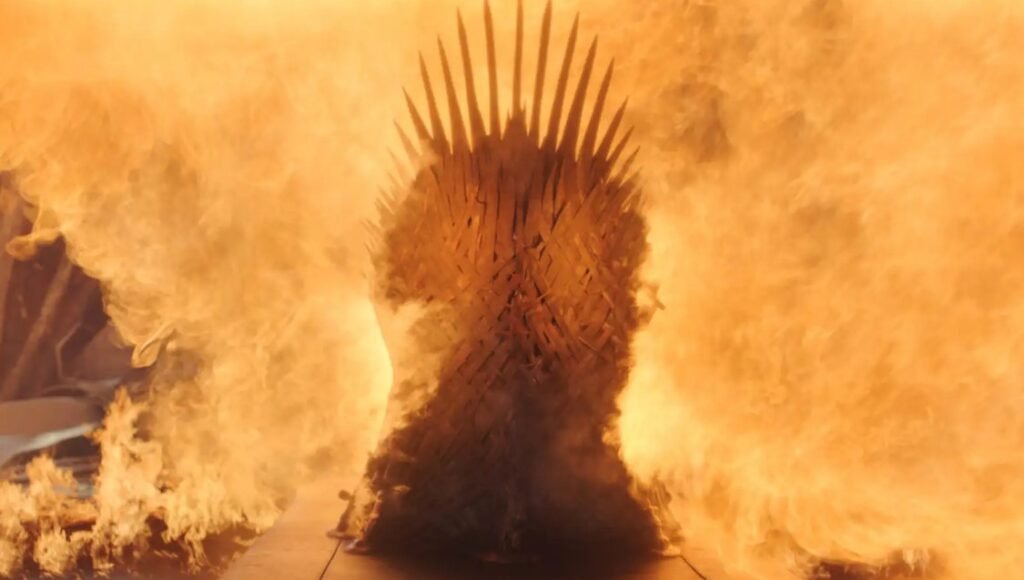
Jon Snow — Aegon Targaryen, the true heir to the Iron Throne — recognizes that Daenerys has become the tyrant she claimed to oppose. After a final conversation in the throne room, he kills her. Drogon — her surviving dragon — melts the Iron Throne and flies east with her body.
The game of thrones ending explained then moves to its political resolution. The lords and ladies of Westeros gather to decide who will rule. Sansa Stark advocates for Northern independence. Tyrion Lannister proposes a new system — a council of great lords choosing the king rather than hereditary succession.
And Tyrion proposes Bran Stark as the first king chosen by this council. Bran accepts. The Six Kingdoms are born — the North seceding as an independent kingdom under Sansa’s queenship.
What Happened to Every Major Character
The game of thrones ending explained character by character covers every major figure in the show’s final resolution.
Jon Snow is exiled beyond the Wall for killing Daenerys — a political compromise between the Unsullied who demand justice and the Northern lords who refuse to see him punished for it. He travels beyond the Wall with the Free Folk, apparently choosing to live outside the political world that has cost him everything.
Sansa Stark becomes Queen in the North — ruling an independent kingdom that has formally separated from the Six Kingdoms. It is the clearest success story the finale offers — a character who began as a powerless child and ends as a sovereign ruler on her own terms.
Arya Stark sails west of Westeros — beyond the edge of the known world — to explore unmapped territory. Her ending reflects her entire arc — a refusal to be contained by the world she was born into.
Tyrion Lannister serves as Hand of the King to Bran — beginning what the finale implies will be a long period of political service in which he attempts to repair the damage of everything that came before.
Bran Stark sits on the throne of the Six Kingdoms — a deeply unconventional choice that the show presents as a deliberate rejection of the kind of rulers who have always sought power in Westeros.
For the full story of Bran’s transformation from a boy who fell from a tower to the Three-Eyed Raven who became king, our Bran Stark Explained article covers his complete arc in depth.
Why Daenerys’s Turn Was So Controversial
The single most debated element of the game of thrones ending explained is Daenerys Targaryen’s decision to burn King’s Landing.
The show had been building toward the possibility of Targaryen madness in her character across all eight seasons — through the deaths of Missandei and Jorah, through her increasing isolation, through her growing willingness to use fire as a first resort rather than a last one.
But the speed of her turn in the final season — compressed into fewer episodes than the character’s development required — left many viewers feeling the conclusion was earned by the story’s logic but not by the show’s pacing.
The game of thrones ending explained controversy around Daenerys is therefore not simply about what happened but about how quickly it happened — a grievance that the show’s truncated final season made impossible to fully resolve.
For context on the Targaryen madness that contributed to her arc, our Targaryen Madness Explained article covers the hereditary curse that shaped both Daenerys and the dynasty before her.
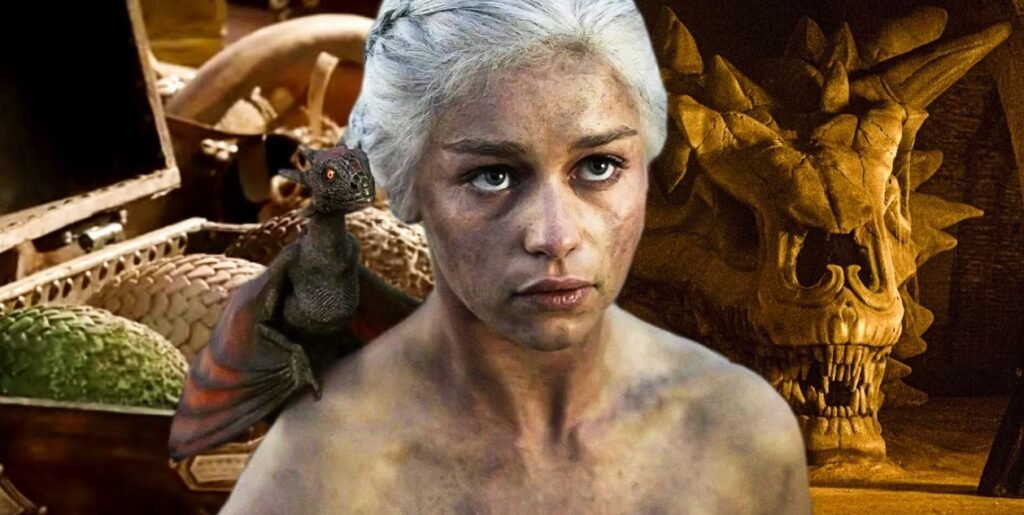
Credit: Image via Winter is Coming — Game of Thrones season 8 finale analysis © HBO
Why Bran Becoming King Did Not Land
The game of thrones ending explained controversy around Bran’s election as king is distinct from the Daenerys controversy — and in some ways more fundamental.
Bran’s selection by the council is presented as a rejection of hereditary succession — a deliberate choice of someone who does not want power and who possesses a unique ability to remember and learn from the past.
But the show had spent much of seasons seven and eight sidelining Bran’s character — reducing him to a vessel for exposition and greensight rather than developing him as a figure with genuine agency and presence.
The result was a finale that asked audiences to accept a deeply unconventional political resolution on behalf of a character many viewers felt they no longer knew well enough to invest in emotionally.
The game of thrones ending explained frustration around Bran is ultimately a pacing problem — a conclusion that required more character development than the final season had time to provide.
What the Finale Got Right
The game of thrones ending explained debate has been so dominated by its controversies that what the finale actually did well tends to be overlooked.
The Stark family resolutions are genuinely satisfying — each of the four surviving siblings ending up in a place that reflects their individual journeys with real thematic coherence.
Jon’s exile beyond the Wall is bittersweet but honest — a man who never wanted power, whose true identity brought him nothing but suffering, finally finding a life outside the political world that has destroyed everyone around him.
Sansa’s queenship is the clearest triumph the show offers — and one of the most emotionally resonant character resolutions in the series.
Arya’s voyage west is the most imaginatively open ending the show provides — a character whose entire arc has been about refusing to accept the world as it is, sailing toward a world that has never been seen.
The game of thrones ending explained at its best moments captures something true about the show’s core themes — that the game of thrones consumes everyone who plays it, and that the survivors are those who find ways to step outside it.
Why It Still Divides Fans Fifteen Years Later
The game of thrones ending explained conversation in 2026 is shaped by a specific and unusual factor — the books have not been finished.
George R.R. Martin has not published The Winds of Winter or A Dream of Spring — the novels that would tell his version of how the story concludes. The show’s ending is therefore still, fifteen years later, the only conclusion that exists for the A Song of Ice and Fire narrative.
Many fans remain convinced that Martin’s version will differ meaningfully from what the show delivered — that Bran’s kingship, Daenerys’s turn, and Jon’s exile reflect television constraints rather than Martin’s intended conclusion.
Until The Winds of Winter arrives, that conviction cannot be confirmed or denied — which keeps the game of thrones ending explained debate permanently alive.
For the full story of where The Winds of Winter actually stands and what Martin has confirmed about his timeline, our Winds of Winter Release Date Explained article covers every confirmed update from Martin himself.
What the 15th Anniversary Reveals About the Ending’s Legacy
The game of thrones 15th anniversary has reframed the conversation about the show’s conclusion in an interesting way.
The unseen season eight footage released by HBO on April 17, 2026 did not defend the ending or argue for its quality. It simply showed the people who made it saying goodbye — and reminded audiences that whatever their feelings about how the story concluded, extraordinary human effort went into every frame of it.
The game of thrones ending explained in the context of fifteen years of hindsight is therefore not simply about whether the finale was good or bad. It is about what the show meant — and whether its flawed conclusion diminishes or simply complicates an achievement that remains genuinely extraordinary.
Most honest assessments land somewhere between those poles. The ending was imperfect. The show that preceded it was remarkable. Both things are true simultaneously — and fifteen years on, that seems like the most accurate game of thrones ending explained that anyone can honestly offer.
Final Thought
Game of thrones ending explained ultimately comes down to a question that has no clean answer fifteen years after the fact.
Did the show earn its conclusion?
The honest answer is partly yes and partly no — which is exactly what made the finale so divisive and what keeps the conversation so alive.
The Stark resolutions were earned. Daenerys’s tragedy was logically coherent but pacing-compromised. Bran’s kingship was thematically interesting but emotionally underprepared. Jon’s exile was honest but bittersweet in ways the show did not fully acknowledge.
The game of thrones ending explained is therefore not the ending of a perfect show. It is the ending of an extraordinary show that ran out of time to do justice to everything it had built — and that left audiences with enough unresolved feeling to keep arguing about it for fifteen years and counting.
That kind of passion is itself a form of tribute. You do not argue for fifteen years about something that did not matter.