Dragons once ruled the skies and defined power in Westeros. Their disappearance reshaped the entire world—but understanding why dragons died out reveals a much deeper story.
The Mystery of Why Dragons Died Out
To understand why dragons died out, we need to look beyond a single cause.
At their peak, dragons made House Targaryen nearly unstoppable. Armies could not stand against them, castles fell in moments, and entire wars were decided from the sky.
Yet within a few generations, dragons vanished.
This was not sudden. It was a gradual collapse caused by multiple failures—biological, environmental, and magical.
1. Loss of Valyrian Knowledge
One of the most important reasons why dragons died out is the loss of knowledge after the Doom of Valyria.
The Valyrians were not just dragon riders. They were experts in dragonlore and likely understood:
- How to breed dragons effectively
- How to manage their growth
- How to maintain their strength
When Valyria was destroyed, most of this knowledge disappeared.
The Targaryens survived, but they inherited only fragments of what was once known. Without that understanding, maintaining dragon populations became increasingly difficult.
2. Captivity in the Dragonpit
Dragons were never meant to be confined.
In King’s Landing, many dragons were kept inside the Dragonpit. This drastically altered their natural behavior and development.
Captivity resulted in:
- Stunted growth
- Reduced mobility
- Increased stress
Over time, these factors weakened dragons physically and shortened their lifespans. This is one of the most overlooked but critical reasons why dragons died out.
3. Inbreeding and Genetic Decline
Just like the Targaryens, dragons were bred within a limited population.
This lack of genetic diversity likely caused:
- Physical deformities
- Reduced fertility
- Higher mortality rates
In real-world biology, isolated populations often suffer from these exact problems.
This makes genetic decline one of the strongest scientific explanations for why dragons died out.
4. The Dance of the Dragons
The civil war known as the Dance of the Dragons was catastrophic.
During this conflict:
- Dragons fought and killed each other
- Riders turned against their own blood
- Key breeding lines were destroyed
This event alone wiped out a large portion of the dragon population.
It was not just a war—it was a turning point that accelerated extinction and directly contributed to why dragons died out.
5. Decline of Magic in the World
Magic in the world of Game of Thrones is not constant.
After the Doom of Valyria, magic began to fade.
Since dragons are closely tied to magic, this decline had a direct impact:
- Dragon eggs stopped hatching
- Existing dragons weakened
- Survival rates dropped
This suggests that why dragons died out is not just about biology, but also about the fading of magical forces in the world.
6. Human Control and Fear
Dragons are powerful, but they are also dangerous.
Over time, humans tried to control them more strictly.
This included:
- Limiting their freedom
- Keeping them close to cities
- Restricting their natural instincts
These efforts disrupted their natural lifecycle.
Instead of thriving, dragons became dependent and weakened, further contributing to why dragons died out.
7. Environmental Mismatch
Westeros was not Valyria.
Valyria was filled with volcanic activity and extreme heat, conditions that were ideal for dragons.
Westeros, on the other hand, lacked many of these features.
This environmental mismatch created:
- Poor living conditions
- Reduced adaptability
- Lower survival rates
Without the right environment, dragons could not thrive, making this another key factor in why dragons died out.
8. The Loss of Skilled Dragonriders
Another often ignored reason why dragons died out is the decline in skilled dragonriders.
Controlling dragons required experience, confidence, and knowledge passed down through generations.
As wars, deaths, and political instability increased:
- Fewer skilled riders remained
- Training became inconsistent
- Control over dragons weakened
Without capable riders, dragons became harder to manage and more vulnerable.
The Return of Dragons Changes the Narrative
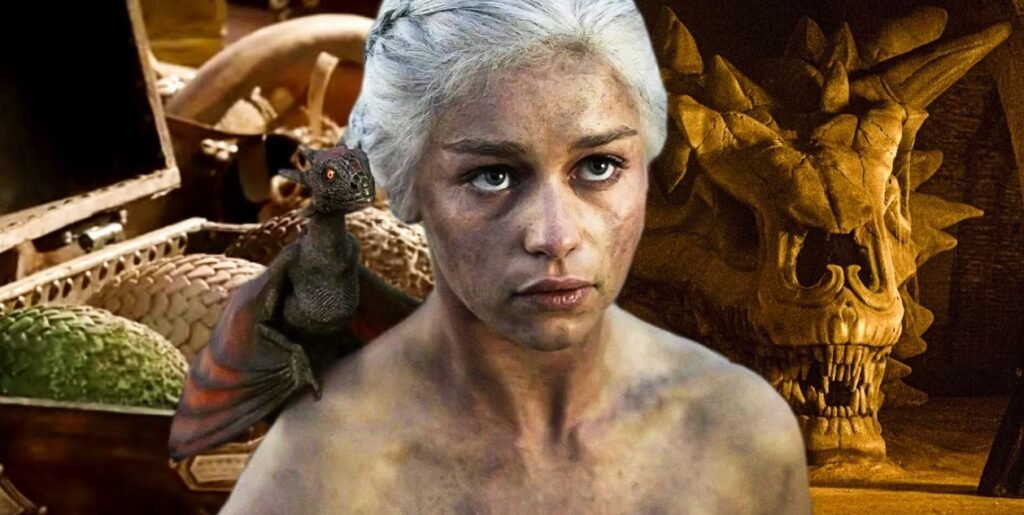
The birth of Daenerys Targaryen’s dragons suggests that extinction was not permanent.
Their return indicates:
- A resurgence of magic
- The survival of dormant dragon eggs
- A possible restoration of lost knowledge
This changes how we view why dragons died out. It suggests that dragons did not disappear entirely—they were simply pushed to the brink.
Connection to Bloodlines and Magic
The fate of dragons is closely tied to:
- Valyrian Bloodline Explained: 7 Shocking Secrets Behind Dragonlord Power
- Valyrian Blood Magic: 5 Dark Secrets Behind Fire Immunity and Dragons
These connections show that dragons were never independent creatures. Their survival depended on both bloodlines and magic.
Final Thought
The answer to why dragons died out is not simple.
It is the result of multiple failures:
- Lost knowledge
- Genetic decline
- Human interference
- Weakening magic
- Environmental mismatch
- War and destruction
Together, these forces created a slow and inevitable collapse.
Dragons did not vanish overnight. They faded, generation by generation, until only stories remained.
And yet, their return proves one thing:
Extinction in this world is never truly permanent.