Targaryen Madness has shaped some of the most terrifying moments in Westerosi history—but is it truly a curse, or something far more explainable?
The Truth About Targaryen Madness
The idea of Targaryen Madness has followed House Targaryen for generations. From whispered court rumors to outright rebellion, the belief that madness runs in their blood has become almost unquestioned.
The famous saying—“When a Targaryen is born, the gods flip a coin”—captures this perfectly. But sayings are not evidence. To truly understand Targaryen Madness, we need to examine the conditions that created it.
What emerges is not just a story of insanity, but a combination of biology, power, and psychological pressure.
1. Inbreeding and the Roots of Targaryen Madness
One of the strongest explanations for Targaryen Madness lies in their long-standing practice of inbreeding.
To preserve their Valyrian heritage, Targaryens regularly married within their own family. While this maintained their distinctive appearance and supposed connection to dragons, it also had serious consequences.
In real-world genetics, inbreeding increases the likelihood of:
- Recessive genetic disorders
- Emotional instability
- Cognitive irregularities
Over generations, these risks compound. This makes Targaryen Madness not just possible, but increasingly probable as the bloodline continues.
2. Absolute Power and Psychological Decline
Power plays a critical role in understanding Targaryen Madness.
Targaryens ruled Westeros with near-total authority, especially during the height of their dragon power. When rulers face no meaningful opposition, their decisions go unchecked.
This environment can lead to:
- Paranoia
- Delusions of grandeur
- Cruel or impulsive behavior
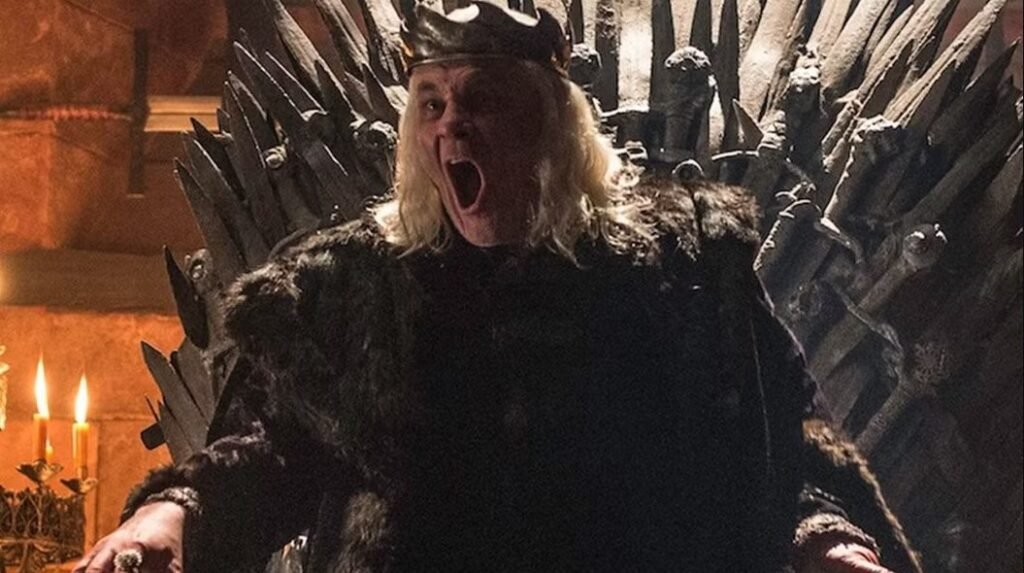
King Aerys II is often cited as the clearest example of Targaryen Madness, but his descent was also shaped by years of unchecked authority and fear of betrayal.
3. Isolation from the Rest of Westeros
Another key factor behind Targaryen Madness is cultural and social isolation.
The Targaryens were not native to Westeros. They maintained Valyrian customs, spoke a different language, and often saw themselves as separate from those they ruled.
This isolation created:
- Emotional distance from subjects
- Difficulty forming trust
- A sense of superiority
Over time, this separation contributed to instability. Many Targaryens lived in a world where few people could truly relate to them, increasing the likelihood of behaviors labeled as Targaryen Madness.
4. The Burden of Legacy
Every Targaryen was born into a legacy of power, conquest, and dominance.
They were expected to:
- Live up to legendary ancestors
- Maintain control over the realm
- Protect the image of their house
This constant pressure created intense psychological strain.
Failure was not an option. Weakness was not tolerated. Under such conditions, even stable individuals could begin to fracture, reinforcing the perception of Targaryen Madness.
5. The Loss of Dragons and Identity
Dragons were central to Targaryen identity.
They were not just weapons—they were symbols of legitimacy and superiority. When dragons began to die out, something fundamental changed within the family.
The loss of dragons led to:
- Reduced authority
- Increased political challenges
- A crisis of identity
Without dragons, Targaryens were forced to rule like ordinary monarchs. This shift destabilized many rulers and intensified the conditions that led to Targaryen Madness.
6. Misinterpretation and Political Propaganda
Not every case of so-called Targaryen Madness was genuine.
History is written by those in power, and political enemies often labeled Targaryen rulers as mad to justify rebellion or opposition.
In some cases:
- Strong rulers were feared and misunderstood
- Unconventional decisions were exaggerated
- Narratives were shaped for political gain
This means that Targaryen Madness is partly real and partly constructed through history.
The Connection to Valyrian Bloodlines
To fully understand Targaryen Madness, it must be viewed alongside Valyrian bloodline practices.
Selective breeding preserved power—but also preserved flaws.
This connects directly to the ideas explored in:
Valyrian Bloodline Explained: 7 Shocking Secrets Behind Dragonlord Power
The same system that created dragonlords may have also created instability.
A Pattern That Could Not Be Escaped
When you combine:
- Genetic risk
- Absolute power
- Isolation
- Psychological pressure
You get a pattern that repeats itself.
This is why Targaryen Madness appears across generations rather than in isolated cases.
Final Thought
Targaryen Madness is not simply a curse or a coincidence.
It is the result of deliberate choices—choices about blood, power, and control.
The Targaryens tried to preserve greatness within their bloodline. In doing so, they may have also preserved the very traits that led to their downfall.
In the end, the greatest threat to House Targaryen was never external enemies.
It was what ran in their veins.